
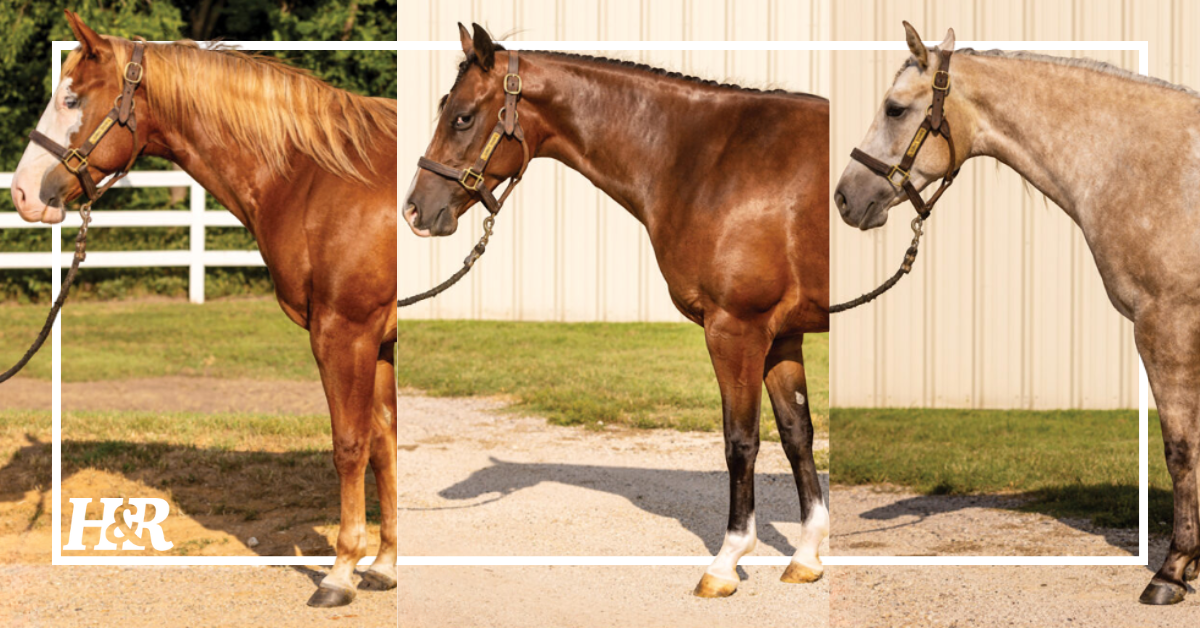
In the realm of conformation judging, the top horse may not always be immediately obvious. In such cases, it can be helpful to start by identifying the horse with the least positive attributes. This was the approach I took when evaluating a class of young reining mares. After carefully assessing each horse, I first determined my third-place pick before closely comparing the top two contenders based on criteria such as balance, structural correctness, breed and sex characteristics, and muscling.

The Placings
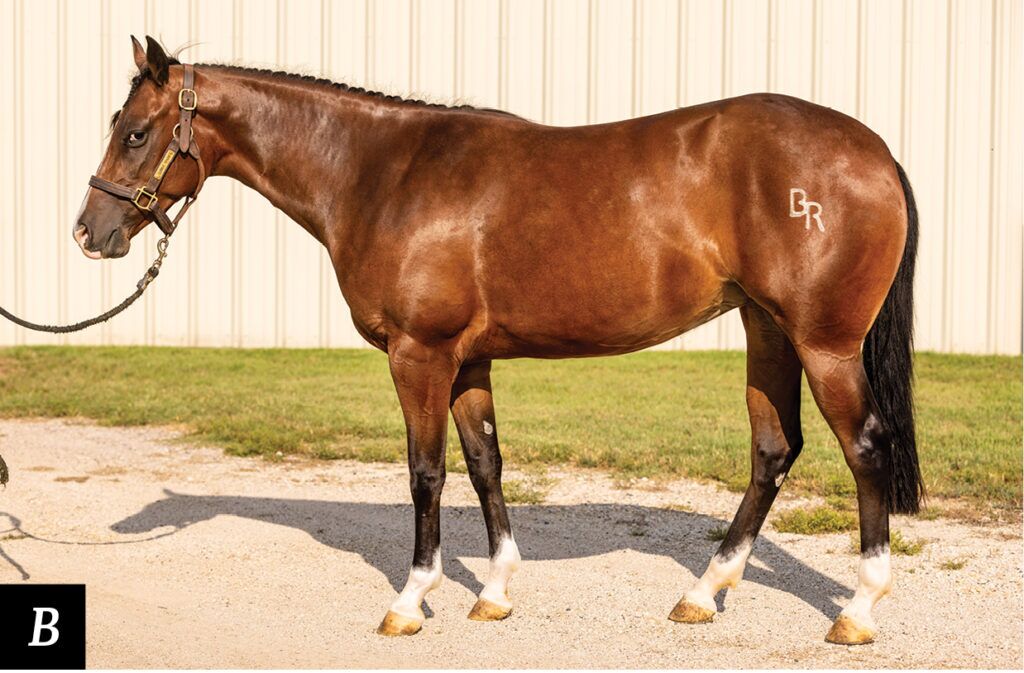
🥇 Mare B
Upon initial inspection, this bay mare exudes balance and athleticism. She displays a level profile, divided into even thirds from front to back. Her topline is robust, with well-placed withers and a proportionate back length. While her croup is slightly steep, it’s a minor flaw, and her tailset is commendable.
Her feminine head is alluring, with a clean throatlatch. The neck is of suitable length, seamlessly connecting to the chest and withers. A well-sloped shoulder enhances her stride reach. Adequate heartgirth depth and substantial hip musculature make her a standout 2-year-old.
Her front legs are pristine, maintaining straightness through the knees, and her pastern slope harmonizes with her shoulder angle. The hind legs boast impeccable hock placement, forming a plumb line to the ground, with hocks nearly level with knees.
🥈 Mare C
This sorrel mare, while attractive, lacks the balance found in the bay mare. Although her withers are well-positioned, a slight adjustment backward could enhance her profile. She exhibits a longer back and a higher hip than withers, yet transitions smoothly to a long, powerful croup—a desirable trait for reining.
While her head may be less refined with a smaller eye compared to the bay, her throatlatch is appealing. The neck length is proportionate, albeit tying in slightly low to the chest. An upright shoulder and adequate heartgirth depth contribute to her overall muscle volume and definition.
The mare’s front legs are clean, with appropriately sloped pasterns. Higher-set hocks than knees impact her topline balance, while hock angle warrants attention, especially if cow-hocked.
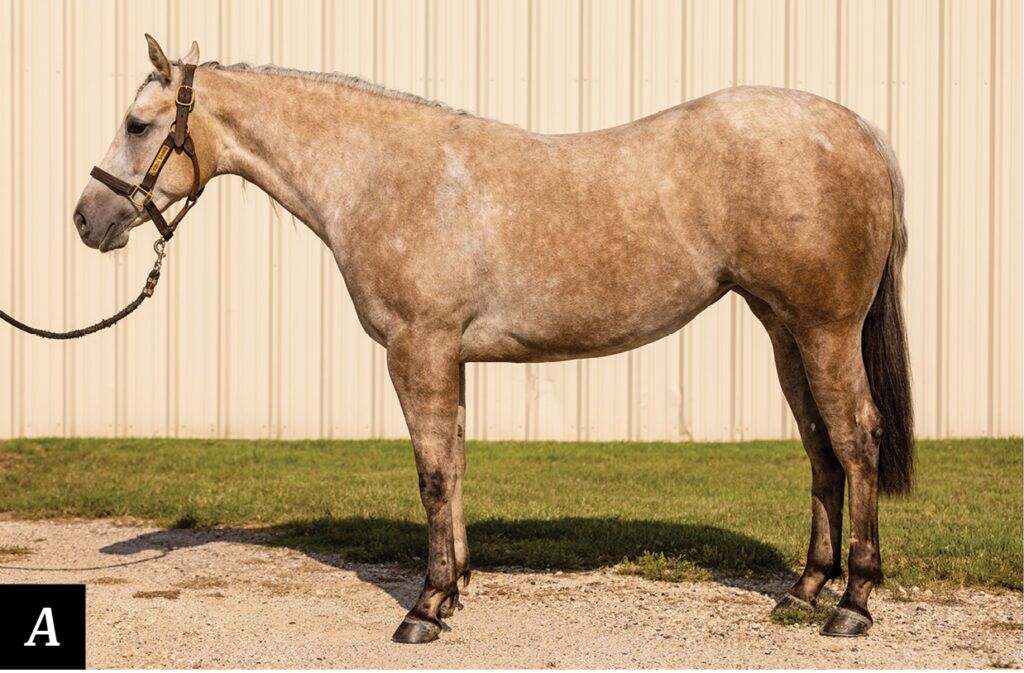
🥉 Mare A
This mare, though visually striking, lacks balance within this class. Her elongated middle section and higher hip than withers contribute to an unbalanced profile. Withers positioned too far forward and a long back diminish her topline strength through the loin. Adequate croup and tailset partially redeem these shortcomings.
The mare’s head, although slightly elongated, maintains an attractive appearance. A refined throatlatch and well-placed neck would improve her overall profile. However, an upright shoulder and lack of muscle mass place her at a disadvantage in this lineup.
Front legs appear straight, but pastern alignment mirrors the shoulder angle, impacting ride comfort. High-set hocks with insufficient angle limit hind-end propulsion, requiring additional effort for optimal performance.
Marvin Kapushion operates Kapushion Training in Whitewater, Colorado, alongside his wife, Sue. Their training services encompass a wide range, from reining to pleasure horses. As an esteemed judge holding cards with AQHA, APHA, ApHC, and NSBA, Marvin has officiated numerous prestigious competitions both nationally and internationally.
To submit a photo of your horse for Conformation Clinic evaluation, kindly forward a left-side profile photo of your horse (digital photos should be high-resolution, 300 dpi, at least 3″ x 5″) to HorseandRider@equinenetwork.com with your contact details and your horse’s breed, age, gender, and height. (All breeds are welcome!)
How to Capture a Quality Conformation Clinic Photo
—H&R—