
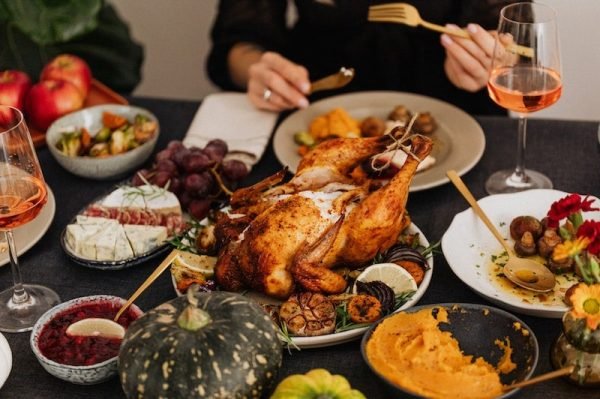
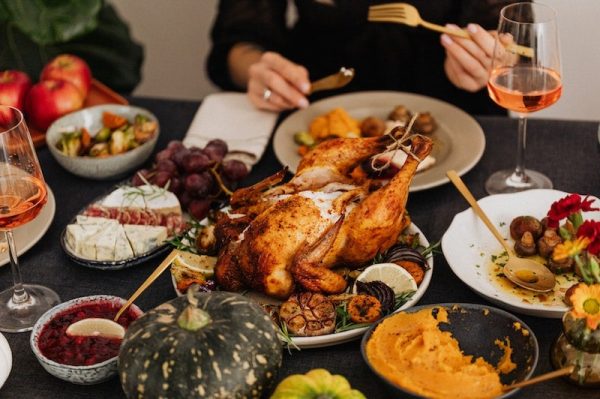
When cooking Christmas dinner with a dog around, you’ll become hyper-aware of every crumb that falls to the floor. Your dog will turn into a four-legged vacuum, watching every move between the cutting board and the countertop.
And inevitably, someone at the table will ask: “Can we give him some turkey?”
The answer isn’t straightforward. Dogs can safely consume several foods from your holiday feast – but the preparation is crucial. What’s safe for humans might be harmful to dogs, and sometimes it’s not the food itself but the additives we use.

Quick Reference: 10 Safe Christmas Foods for Dogs
- Turkey (plain, cooked, boneless)
- Cranberries (unsweetened only)
- Potatoes (cooked, plain)
- Green beans (fresh or cooked)
- Homemade broth (no onions or garlic)
- Eggs (cooked thoroughly)
- Dog-friendly gingerbread cookies
- Carrots (raw or cooked)
- Pumpkin (plain, not pie filling)
- Cheese (small amounts only)

What “Plain” Actually Means
When vets say “plain,” they mean aggressively boring. No butter. No salt. No herbs. No garlic powder. No onion powder. Nothing that makes human food taste good.
This is harder than it sounds because we season almost everything by default. That turkey gets rubbed with butter and herbs before roasting. Those mashed potatoes get whipped with cream and butter. The green beans get sautéed in garlic.
For your dog, you’re essentially cooking a parallel, flavorless version of Christmas dinner. Set aside portions before seasoning, or prepare small amounts separately.
The Protein Question
Turkey is the obvious place to start. Plain, cooked turkey breast is safe and something most dogs will be excited about. But here’s what you need to strip away first: skin, bones, and any part that touched seasonings.
The skin concentrates the fat and the seasonings – both problems for dogs. Cooked bones splinter and cause internal damage. And those herb rubs often contain garlic or onion powder, both toxic to dogs.
Raw turkey is also off the table. Raw poultry carries the same Salmonella and Campylobacter risks for dogs as it does for humans.
If you’re making homemade broth from turkey or chicken, dogs can have some – but only if you’ve skipped the onions, garlic, and shallots. Carrots, celery, rosemary, and thyme are all safe additions. A pinch of peppercorn is usually fine, though it might cause mild stomach upset in sensitive dogs.
Eggs are another safe protein if you’re baking. Cook an extra one plain and let it cool completely. Raw eggs carry Salmonella risk, so always cook them through.

The Vegetable Lineup
This is where things get surprisingly permissive. Dogs can eat quite a few vegetables that show up at Christmas dinner – they just need the plain versions.
Potatoes and sweet potatoes are both safe once they’re fully cooked. The key word is “fully” – raw or undercooked potatoes contain solanine (concentrated in the peels), which is toxic. But baked, boiled, or roasted potatoes that have cooled down are perfectly fine. Just don’t add butter, sour cream, cheese, or any of the toppings that make them appealing to humans.
Green beans are safe raw or cooked. They’re actually nutritious – vitamin A, vitamin K, calcium, magnesium, phosphorus. Fresh green beans make decent crunchy treats. Just keep them plain. That green bean casserole with fried onions and cream sauce? That’s a firm no.
Carrots are safe both ways, too. Raw carrots provide crunch and can help with dental health. Cooked carrots are softer and easier to digest. Either way, cut them into appropriate sizes for your dog to prevent choking.
Pumpkin shows up in a lot of holiday recipes, and plain pumpkin puree is actually beneficial for dogs. It’s high in fiber, low in calories, and gentle on digestion – vets often recommend it for dogs with stomach issues. But we’re talking about pure pumpkin puree, not pumpkin pie filling with its sugar and spices. Dogs can also eat plain roasted pumpkin seeds for a crunchy, protein-rich snack.
The Cranberry Situation
If you’re making cranberry sauce from scratch, you can set aside a small unsweetened portion before adding sugar. Fresh cranberries are safe, though most dogs won’t love the tartness.
Canned cranberry sauce is different. It’s loaded with sugar dogs don’t need, and some brands contain xylitol – an artificial sweetener that’s extremely toxic to dogs and can cause liver failure.
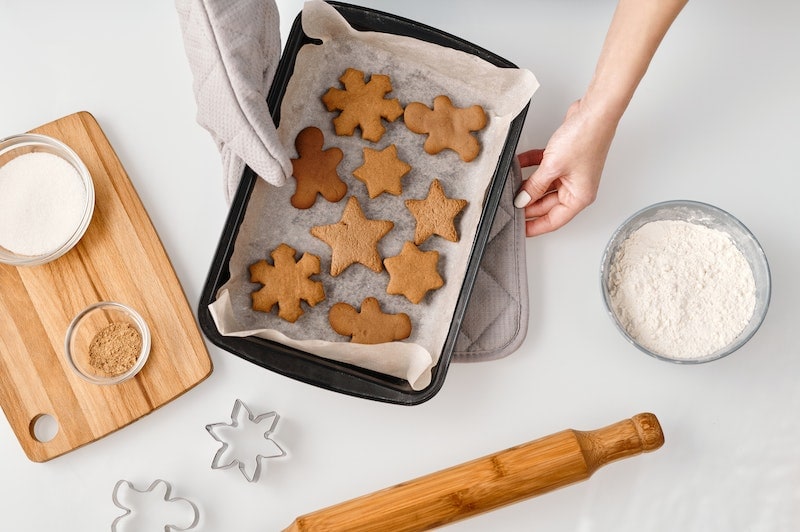
What About Gingerbread?
Gingerbread cookies are a Christmas staple in many homes. Ginger itself is safe for dogs and might even help with nausea, though the research on dogs specifically is limited compared to human studies.
If baking is part of your holiday tradition, you can find dog-friendly gingerbread recipes that skip added sugars and use safe ingredients. Some recipes even include yogurt-based icing that’s safe for dogs. Your dog won’t care that their cookies aren’t decorated – they’ll just be thrilled to participate.