
Article Rewritten:
Have you ever found yourself looking around a room in your home and feeling like something is off, but you can’t quite put your finger on it? It could be due to various reasons like an unbalanced color palette, improperly sized furniture, or incorrectly hung curtains or art. But if you’ve checked all those boxes and still feel like something is missing, it might be that you don’t have the right mix of silhouette weights.
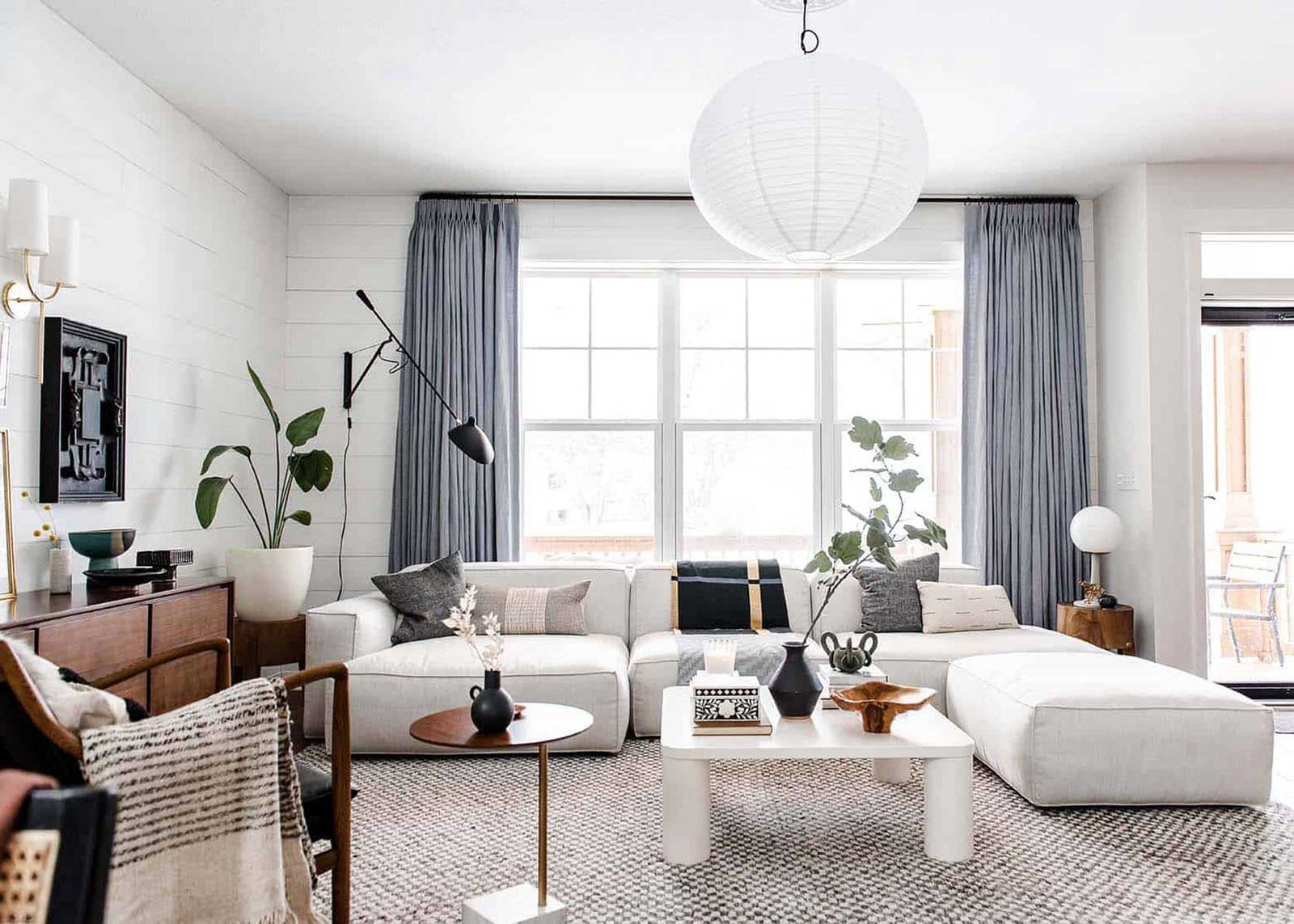
Most furniture and larger accessories can be classified into two categories: leggy and chunky. The key to achieving a balanced look in your space is to strike the right balance between these two categories. While there are exceptions to every rule, I’ve spent some time analyzing images of different rooms to determine the ideal combination of chunky (solid, low-lying base) and leggy (thin-lined silhouette or tall legs).
Before we delve into examples of rooms with the perfect ratio, let’s take a trip down memory lane and explore my previous living room. While I loved the room, it always felt a bit cluttered, especially with baby items and hobby paraphernalia. Upon closer inspection, I realized that the furniture in the room was predominantly leggy with very few chunky pieces.
For instance, the coffee table, sofa, armchairs, and side table were all leggy, with minimal chunky elements. Reflecting on this, I believe that incorporating a chunky coffee table or more substantial chairs would have elevated the room to the next level. The goal of this post is not to criticize your home but to offer insights on how to enhance your space like a professional designer.
In the realm of leggy and chunky, a few ratios work best, such as 1:1 (50/50 split), 1:3 (60/40 split), or even a single sizable piece that deviates from the dominant silhouette in the room. Let’s explore some examples of rooms that adhere to these ratios from the EHD archive.
In Emily’s farmhouse bedroom, the bench and nightstand lean towards the leggy side, while the bed frame and pendant lamp provide a solid balance. Similarly, in the River House bedroom, the chunky bed is complemented by leggy nightstands, creating a harmonious contrast.
Moving to a breakfast nook, we see chunky chairs paired with a slender pedestal table, demonstrating the 50/50 split in action. In Kaitlin’s living room, each leggy piece is balanced by a chunky counterpart, resulting in a cohesive and intentional design.
While it’s essential to strive for balance, some of the best-designed rooms break traditional design rules. For example, Sarah Sherman Samuel’s space features chunky furniture in a room with high ceilings, creating a visually interesting contrast. On the other hand, VSP Interiors’ room showcases a classic English design with predominantly leggy elements that work harmoniously in the traditional setting.
To bring it all together, let’s look at some diverse examples of homes outside the EHD world that effectively incorporate leggy and chunky elements. From Zilah Drahn’s delicate and leggy room to Zoe Feldman’s blend of chunky upholstery and leggy accents, these spaces showcase the versatility of silhouette weights in design.
In conclusion, achieving the right balance between leggy and chunky elements can transform your space and elevate its overall aesthetic. By following the suggested ratios or experimenting with unique combinations, you can create a well-balanced and visually appealing environment in your home. Remember, even a single piece that deviates from the norm can enhance the overall design. Good luck in your design endeavors, and may your space reflect your unique style and personality.