
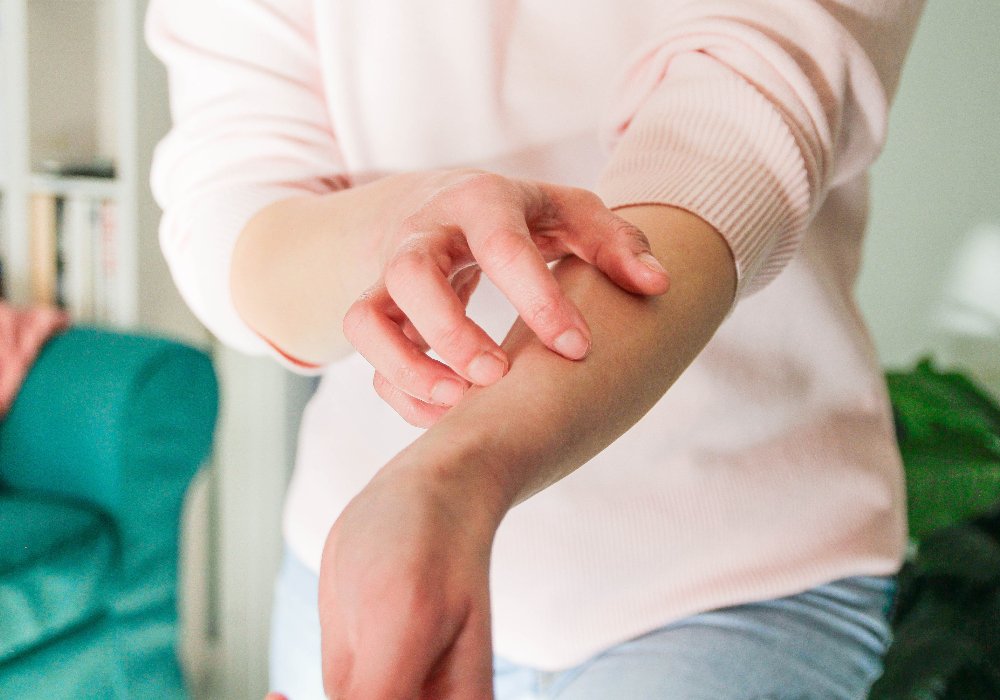
Eczema—whether you live with it yourself or know and love someone who does—is rarely far from your orbit. In the United States, nearly 32 million people, about 10 percent of the population, have some form of eczema, according to the National Eczema Association.
That’s not to say eczema is the most intuitive topic to unpack. To make it easier to understand, I spoke with four board-certified dermatologists to break down what they spent years studying into a clear, easy-to-digest guide to what eczema is, what triggers it and what actually helps keep flares under control.
Featured Experts
- Dendy Engelman, MD is a board-certified dermatologist in New York
- Shira Wieder, MD is a board-certified dermatologist in New York
- Ariel Ostad, MD is a board-certified dermatologist in New York
- Morayo Adisam, MD is a board-certified dermatologist and dermatopathologist in Chicago
What Is Eczema?
“Eczema, most commonly atopic dermatitis, is a chronic inflammatory skin condition where the skin barrier doesn’t function the way it should,” says New York dermatologist Dendy Engelman, MD. “When that barrier is compromised, moisture escapes and irritants, allergens and bacteria can penetrate more easily, leading to redness, itching, dryness and sometimes cracking or oozing.”
The hallmark symptom of eczema is “recurrent itchy patches of skin,” says New York dermatologist Shira Wieder, MD. While it often begins in childhood, eczema can develop at any age. “The cause of eczema is multifactorial, involving genetic predisposition, immune system sensitivity and skin barrier dysfunction,” adds Chicago dermatologist and dermatopathologist Morayo Adisa, MD—and it is not contagious.
While many people use “eczema” and “atopic dermatitis” interchangeably, the term eczema is actually an umbrella term that includes several types, Dr. Wieder explains. These include atopic dermatitis, contact dermatitis, dyshidrotic eczema, nummular dermatitis, seborrheic dermatitis, neurodermatitis and stasis dermatitis—each with its own triggers and patterns.
What’s Happening During a Flare?
During a flare, that weakened skin barrier sets off a chain reaction. Once external triggers penetrate the skin, the immune system mounts an exaggerated inflammatory response. “Inflammatory cytokines are released, leading to redness, swelling and that hallmark intense itch,” Dr. Engelman explains.
Scratching then further damages the barrier, fueling what New York dermatologist Ariel Ostad, MD calls the “itch–scratch cycle,” which he explains “further damages the barrier and prolongs inflammation,” helping explain why eczema can be so persistent and difficult to calm once it begins.
How Is Eczema Different From Other Rashes?
Because eczema can resemble other inflammatory skin conditions, it’s often confused with psoriasis or contact dermatitis. Here’s how each differs:
Eczema (Atopic Dermatitis)
Dr. Engelman explains that eczema “tends to be very itchy and shows up as dry, inflamed, sometimes rough patches,” commonly in the creases of the elbows, behind the knees, on the neck or around the eyes. Over time, repeated scratching can cause the skin to thicken.
Psoriasis
Psoriasis, by contrast, tends to form thicker, more clearly outlined plaques. “The plaques are thicker, with a silvery-white scale on top of red skin,” Dr. Engelman continues. They’re often found on the scalp, elbows, knees and lower back and are driven more by rapid skin-cell turnover than barrier dysfunction.
Contact Dermatitis
Contact dermatitis usually has a clear trigger. “It appears exactly where the skin touched an irritant or allergen: new skin-care product, fragrance, detergent or even nickel jewelry,” she explains. The rash may burn or sting in addition to itching, and once the trigger is removed, it often improves.
“Location and symmetry, thickness and scale of the rash, intensity of itch, can help identify which is which,” Dr. Engelman adds. That said, rashes can overlap in appearance, so if you’re unsure, it’s best to see a dermatologist for an accurate diagnosis.
Common (and Overlooked) Eczema Triggers
Because atopic dermatitis is the most common form of eczema, it’s often what people mean when they refer to “eczema.” Its triggers are also the most widely studied.
“Typical triggers for atopic dermatitis include cold weather, dry air, pet dander, sweat, dust mites, pollen and even viral illnesses like the common cold,” Dr. Wieder explains. “While a consistent skin-care routine involving moisturizers and avoiding triggers like fragrances can be helpful to prevent mild flares, atopic dermatitis is a chronic recurrent disease that has flares and quiet periods. A consistent skin-care routine is often not enough.”
In other words, eczema-prone skin is reactive—and sometimes the triggers are hiding in plain sight. While triggers vary depending on the type of eczema, many everyday exposures can aggravate multiple forms of the condition. “The most frequently missed triggers are personal care products—like soaps, shampoos, conditioners and laundry detergents—with fragrances, dyes or essential oils,” warns Dr. Wieder.
Beyond that, subtle habits can add up. Cologne, perfumes, fabric softeners and scent boosters can irritate sensitive skin. Harsh hand cleansers may weaken the skin barrier. Even long, hot showers and rough fabrics like wool can provoke itching and redness. “I recommend switching out your wool sweaters (or any rough, itchy fabric) for cotton if possible,” Dr. Wieder suggests.
How to Manage Eczema—and When to See a Dermatologist
While eczema can’t be cured, it can absolutely be managed. The focus is on supporting your skin barrier, calming inflammation and avoiding the things that tend to set it off.
Make Moisturizing Non-Negotiable
Daily moisturizing is foundational. “I recommend daily use of thicker moisturizers and applying them within 90 seconds of getting out of the shower,” says Dr. Wieder on what she recommends to eczema patients. “It’s important to apply while skin is still damp,” she adds, because it helps trap water in the skin and prevent it from drying out.
Keep Showers Short and Warm
Since prolonged heat exposure can weaken the skin barrier, keep showers short and use warm (not hot) water. While long, steamy showers may feel soothing in the moment, they can worsen dryness over time.
Read the Ingredient List Carefully
Management also means choosing products strategically. Dr. Wieder suggests looking for moisturizers that contain petroleum, glycerin, colloidal oatmeal, ceramides and hyaluronic acid to help support the skin barrier.
Niacinamide can also help soothe inflammation. However, ingredients like retinoids, fragrance, lanolin, and urea can worsen irritation during eczema flares. It is best to keep your skincare routine simple during flare-ups by using a gentle, fragrance-free cleanser and moisturizer.
For moderate to severe eczema, at-home care may not be enough. Consulting with a dermatologist for maintenance therapy or a preventative treatment plan may be necessary. This could involve using topical steroids or non-steroidal prescription options for long-term management.
If over-the-counter products do not improve symptoms, seeking professional guidance is recommended. Signs of an infected eczema flare include increased pain, pus, crusting, redness, or fever. In such cases, prompt care is crucial.
Treatment options for moderate to severe eczema may include stronger topical medications, non-steroidal anti-inflammatory creams, or biologic injections. It is essential to consult with a board-certified dermatologist to determine the most suitable treatment plan based on the severity and frequency of flare-ups.