
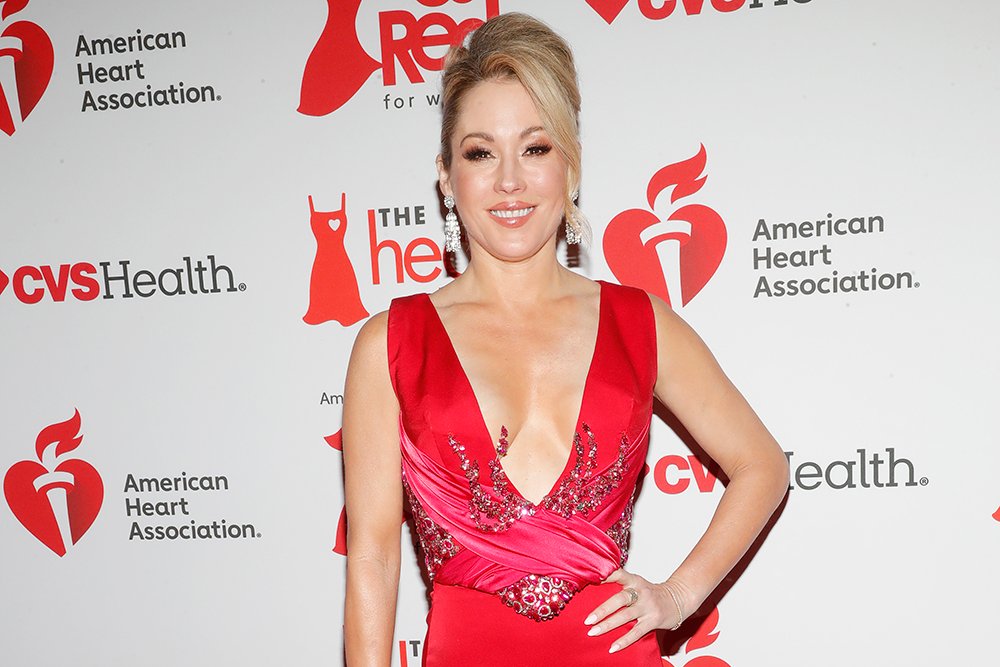
Jen Hale is accustomed to performing under pressure, but her most significant battle took place away from the spotlight. The acclaimed sports journalist, renowned for her work as an NFL sideline reporter for FOX Sports and a presence on NBA sidelines, has forged a career based on resilience. What many viewers may not realize is that amidst the fast-paced world of live television, Hale has been navigating her own journey with heart disease—a journey that has fundamentally altered how she prioritizes self-care.
In recognition of American Heart Month, Hale shares her story about the wake-up call that transformed her life, her advocacy efforts with the American Heart Association, and the importance of tuning in to your body’s signals. From redefining wellness while on the road to the everyday rituals and trusted products that help her maintain her health and readiness for the camera, Hale demonstrates that heart health is not just about saving lives—it’s about enhancing life.
February is American Heart Month. Why is your work with the American Heart Association so important to you?
“Truly, the work they’re doing is life-saving. It was a miracle in my own life. When I was originally diagnosed with dilated cardiomyopathy, I was told there were three scenarios: That about a third of the patients have five years to live, a third need a heart transplant and a third medication can work for.
Part of the process for me was going back through my family history. Turns out my father, my uncle and, I think, my grandfather—the medical records, of course, were not then what they are now…but going through the records, sure enough, it said dilated cardiomyopathy. For them, there were no options. Medication didn’t exist. Heart transplants weren’t nearly as commonplace.
Even though it took about two years to figure out which category I would fall into, it’s amazing to me that now I can take a couple of pills in the morning and a couple of pills at night, and my outcome is so much different than my dad and my uncles—and what we think likely would have been my grandfather’s cause of death.”

The Association’s overall messaging is to push women to just ask, just get checked. What is your one piece of advice that you give?
“Listen to your body and have confidence. You know yourself. If you feel like something’s wrong, you have to fight for yourself.
I actually went to three different doctors before this was caught. I’m a sports journalist, so I go really hard during football season and basketball season, and then it’s normal for me to crash out the week the NBA season ends and catch up on sleep. But the year I was diagnosed, 2018, I never came out of that. I never stopped sleeping 12 to 14 hours a day. I was sleeping through alarms. It got to where I would wake up in bed feeling short of breath, and I’d just been lying down. I’ve always been a big exerciser. That’s my happy place. It was getting harder and harder to do anything. I was getting out of breath walking, let alone running or cycling like I usually did.
No one ever even thought to check my heart because I was in my 30s, I didn’t smoke and I was female. I was told, ‘You’re approaching 40. This is normal fatigue. You’re probably entering perimenopause.’
Had it been caught the first time I went to a doctor, it certainly should have been a much shorter recovery time. My heart was down to 16% function by the time I was diagnosed. It should have been caught at a 30%, 40% type of deal. If you know something’s wrong and something’s off, do something! Of course, did I want it to be low vitamin D and vitamin B? Sure, that would have been great because that’s easy to fix. You take a few more supplements. Deep down, I knew this was more, but that’s what they told me, so I rolled with it.
It wasn’t until my ankles were four times their normal size and my waist was so swollen I couldn’t zip up pants or a skirt that I finally said, ‘No. Somebody has to find something else because this can’t be low vitamin D, low vitamin B or perimenopause. This has to be something else.’”
Besides staying on top of your health, how do you keep up with travel and sleep when you’re on the go?
“You have to prioritize sleep and budget it in like it’s part of your job. It’s so important to anybody’s recovery. That’s how the body restores itself. It’s hard. I know it means I skip other things that I don’t want to skip, especially with a little one, [laughs], but your body has to have that, especially if there’s some sort of underlying condition. I have to take care of myself, number one, because I feel like I was saved for a reason. I’m here to do something on this earth. Number two, I have a mom and my little one’s five. I want to see her walk down the aisle. I want to see her have children.
Invest in your health as well. I’m sure your readers are well familiar with the fact that vitamins aren’t regulated by the FDA. Not all are created equal. You have to get good products that are absorbable by your body and quality ingredients. The cheapest thing off the shelf might not be the thing for you.
I strongly recommend that everyone conduct some research to ensure that the supplements they are taking and the nutrients they are adding to their diet are of high quality. It is important to verify the quality of the products before incorporating them into your routine.
As someone who is frequently in front of the camera, I have found a few things that work really well for me on TV. I often undergo mini laser treatments, which I believe make a significant difference now that I am in my mid-40s. Clear + Brilliant and DiamondGlow facials are essential for me, whether I have an upcoming event or just for regular maintenance, and I usually have them done every two months.
I recently made the switch from using under-eye concealer to pink eye tints, and it has been a game-changer for me. My makeup artist recommended it, saying that it not only works well for red carpet events but for everyday use as well, especially for those who are 20, 30, and over. The light pink tint of the under-eye corrector is much lighter and helps illuminate the under-eye area without caking or settling into fine lines like heavy concealer does.
Additionally, I always make sure to have loose powder with me at all times to combat my natural shine. I carry essentials like ChapStick, lip gloss, and loose powder in a handy clipboard with a compartment inside, so I am always prepared for touch-ups throughout the day.