
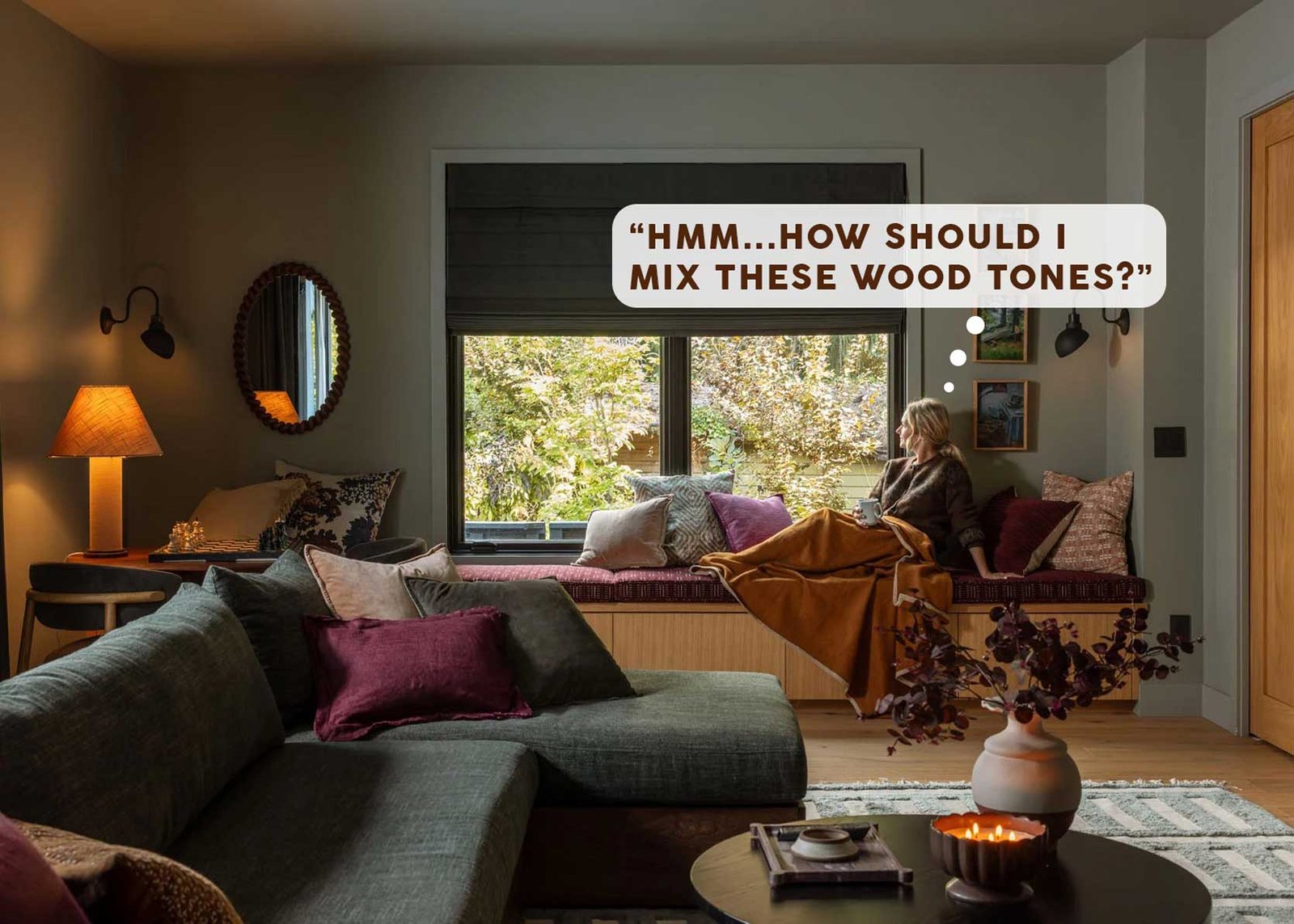
As a professional in the design industry who is also a writer and occasional decorator, I often receive the same set of questions repeatedly. “Where can I purchase rugs?” “What are your favorite paint colors?” “Is it okay to mix metal finishes?” and, for the focus of today’s post, “How can I effectively mix different wood tones?” While these questions may seem routine to someone deeply immersed in this art form, I understand that tackling these tasks on your own can be daunting without proper guidance.
But fear not, as I am here to assist you through this process, as always!
First and foremost, let’s establish a crucial point in this discussion: YES, YOU CAN INCORPORATE MULTIPLE WOOD TONES IN A SINGLE ROOM. While it is not an exact science, there are some fundamental guidelines you can follow to blend different wood tones in a way that appears deliberate, rather than a mishmash of mismatched pieces.
Let’s establish some ground rules first, and then I will illustrate with real-life examples to demonstrate how these guidelines translate into practical application.
Mixing Wood Tones Rule #1: Establish A “Dominant” Wood Tone
Consider a wood palette akin to a color palette, where a 60/30/10 percentage distribution serves as a good starting point. Ideally, 60 percent of the wood tones in your space should take center stage. This often includes your floors or any significant woodwork in your home. Subsequently, 30 percent should comprise your furniture, while the remaining 10 percent can encompass smaller accessories like frames and ladders (which may feature a mix of tones).
Mixing Wood Tones Rule #2: Match Wood Temperature
Wood temperature plays a vital role in this context, as it can make or break the harmony of different wood tones. Wood can be categorized as cool-toned (with blue or gray undertones), warm-toned (such as cherry, oak, walnut, mahogany), or neutral (like white oak or blonde woods). The key is to ensure that even if you have a variety of wood colors in the same room, they should predominantly align in terms of temperature. Combining a gray wood floor with a warm walnut sideboard, for example, can create a visual discord. While it is acceptable to mix neutral wood temperatures with either warm or cool tones for added variety.
Mixing Wood Tones Rule #3: Bring In Contrast
While many rooms opt for uniform wood tones across furniture and finishes, introducing contrast can add an eclectic and curated feel. Embrace varying shades of wood that are closely aligned in color tone or temperature, but differ in darkness or lightness. For instance, pairing walnut with white oak or cherry with red oak can create a visually engaging mix.
Mixing Wood Tones Rule #4: Bridge The Gap With Black-Stained Or White-Painted Wood
At times, we may not have full control over all the wood tones and temperatures present in our homes. Existing floors, inherited family pieces, or beloved functional furniture may dictate the wood elements in a room. In such cases, incorporating wood stained black or painted white (or any other color) can help balance out the diverse wood tones. Emphasizing black wood can effectively achieve this equilibrium.
Mixing Wood Tones Rule #5: Use Rugs As Dividers
Given that most homes do not boast perfectly coordinated designer spaces, rugs can serve as valuable tools to delineate between furniture and floors with clashing wood tones. By strategically placing rugs, you can create a visual buffer that mitigates incongruities between different wood elements.
I have curated a selection of images from the EHD realm (along with one external designer) to showcase how wood mixing manifests in real-life settings. While elucidating rules is informative, witnessing the seamless integration of wood tones provides a more tangible understanding. Let’s commence with the Portland Project.
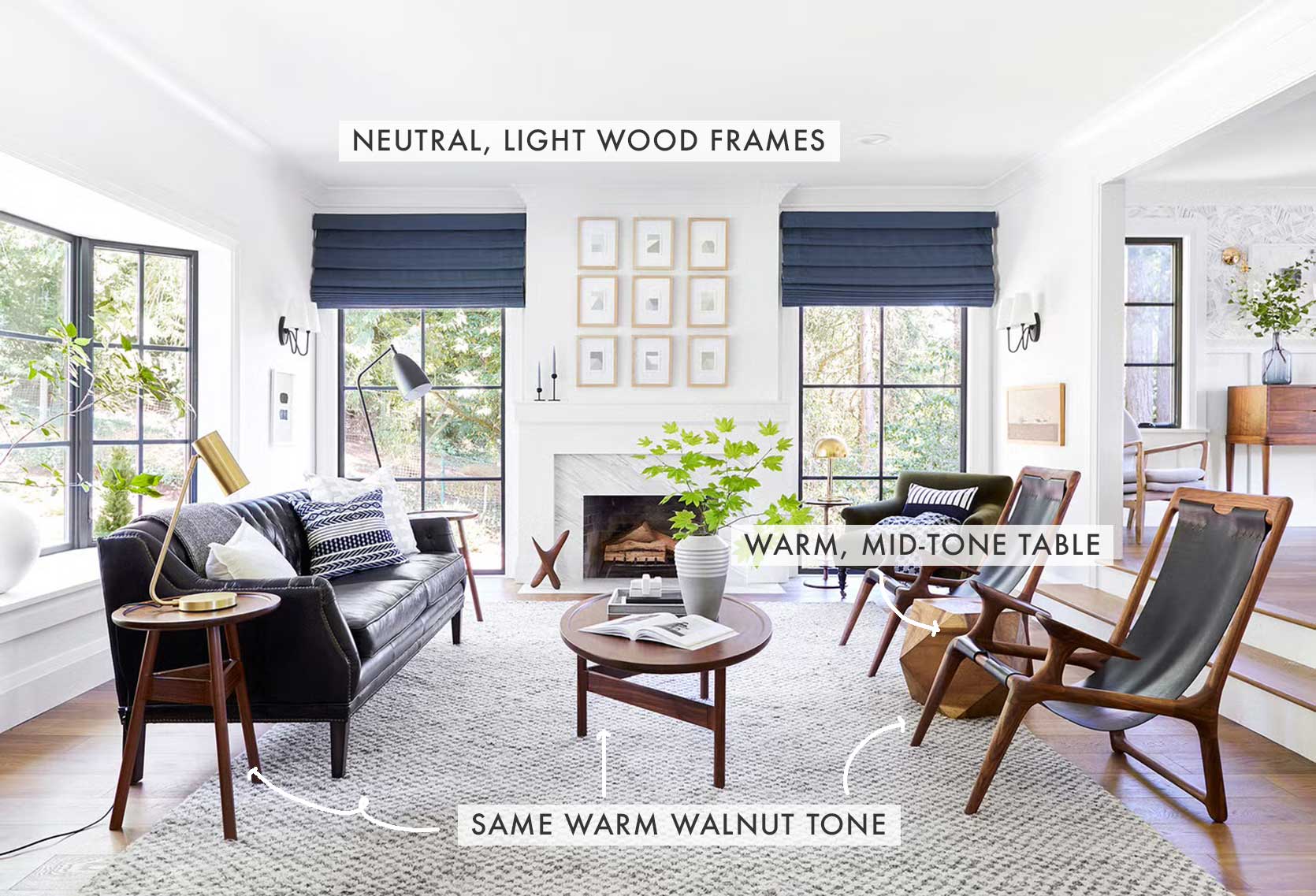
Above and below, Emily and her team embraced warm wood tones, a signature feature evident across many of her projects. The cohesive walnut tones of the coffee table and side table complement the wood hues of the armchairs and floors. Introducing a geometric side table with a mid-level wood tone injects further warmth, while light, neutral wood frames provide a contrasting element.
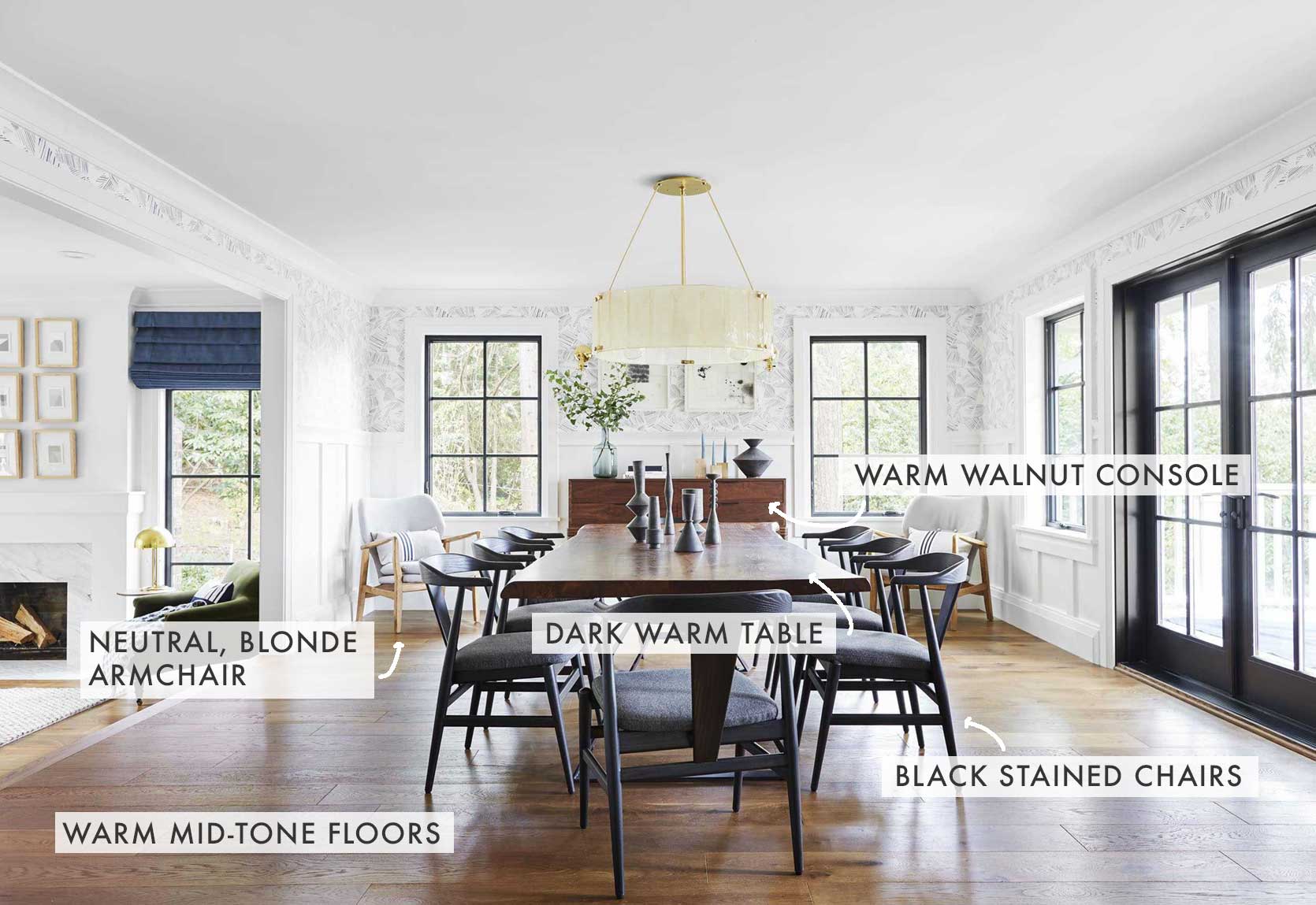
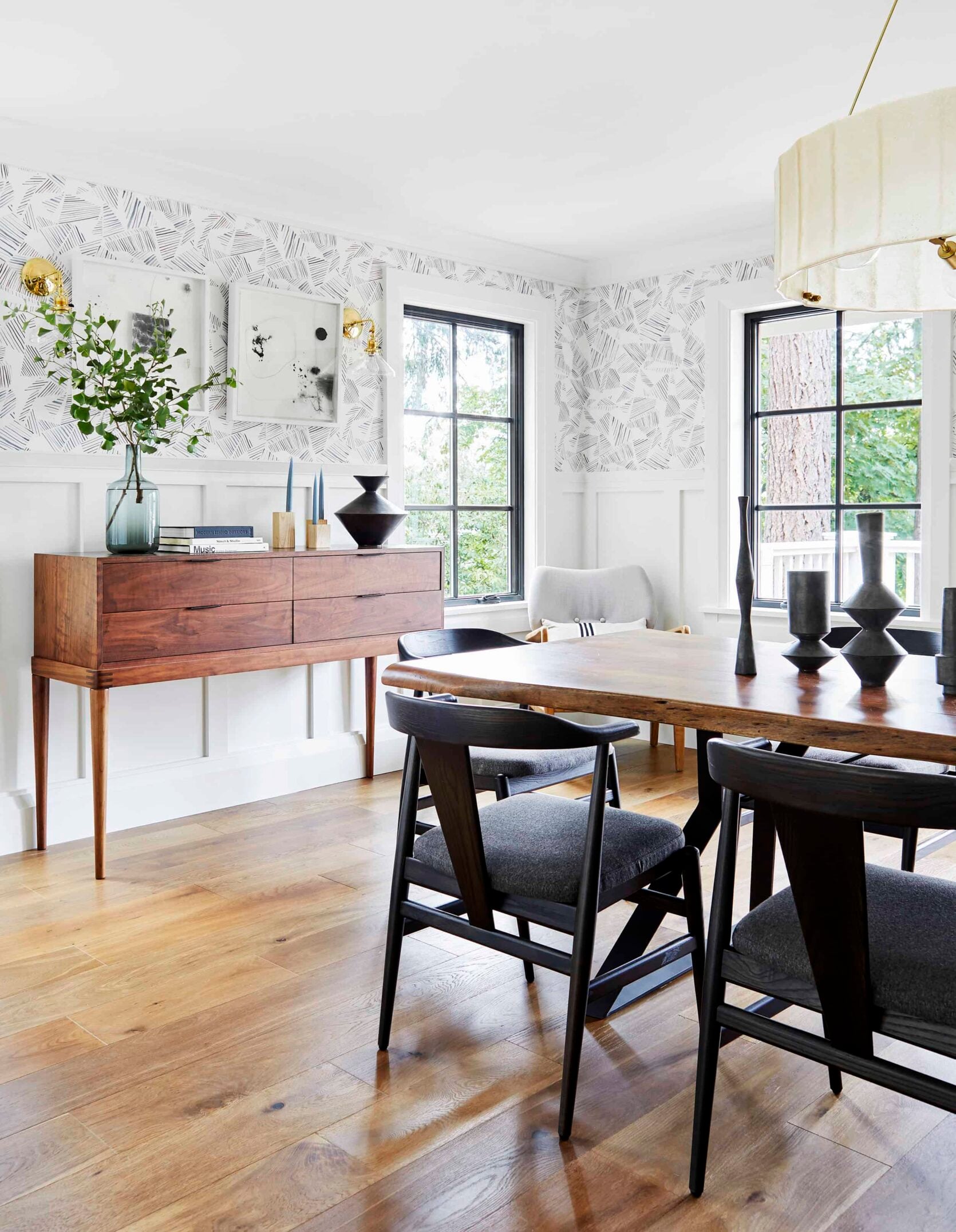
Incorporating black-stained wood chairs not only breaks the monotony of brown tones but also adds an intriguing dimension to the Portland Project dining room. The space exhibits a harmonious blend of dark, light, warm, and neutral wood tones.
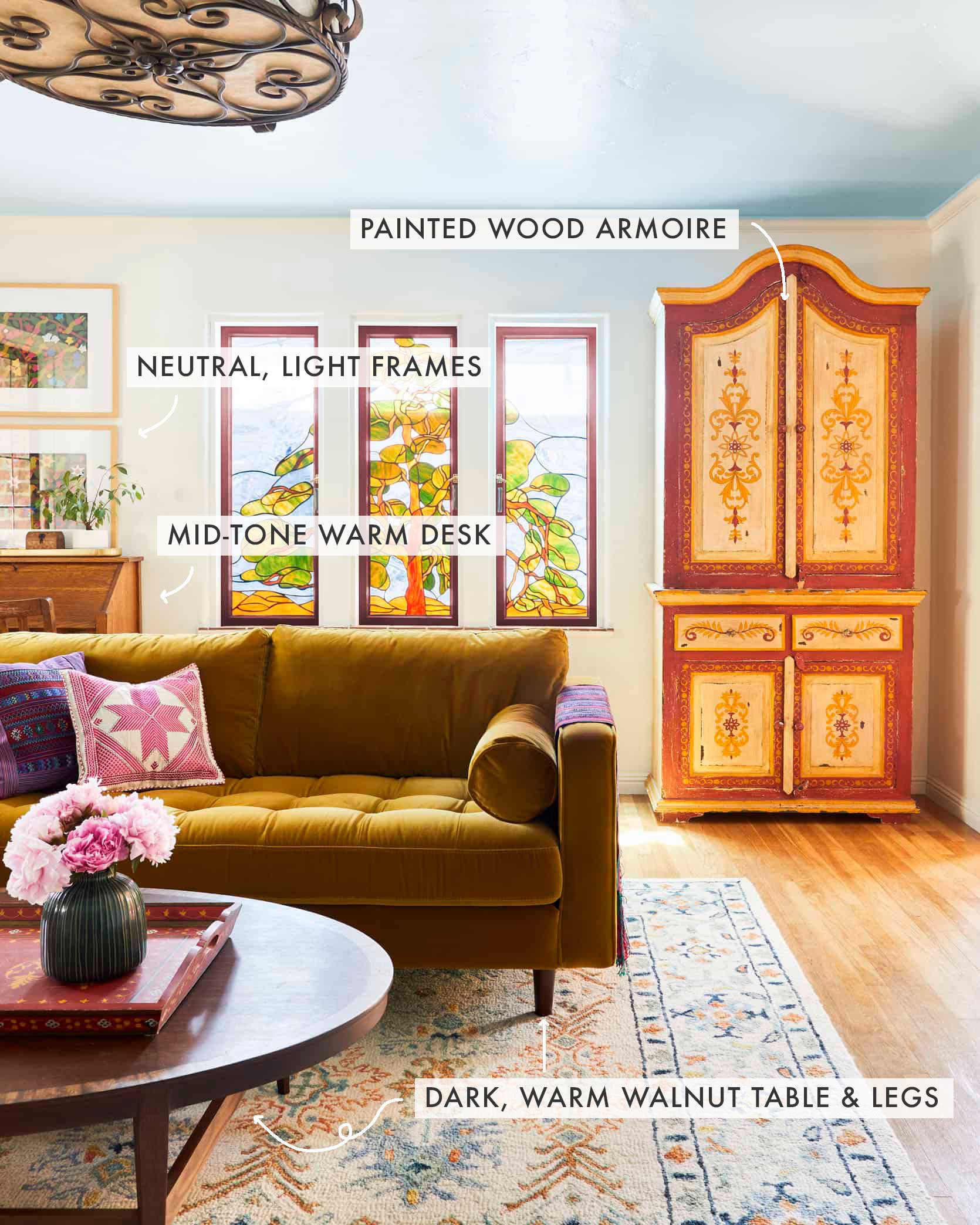
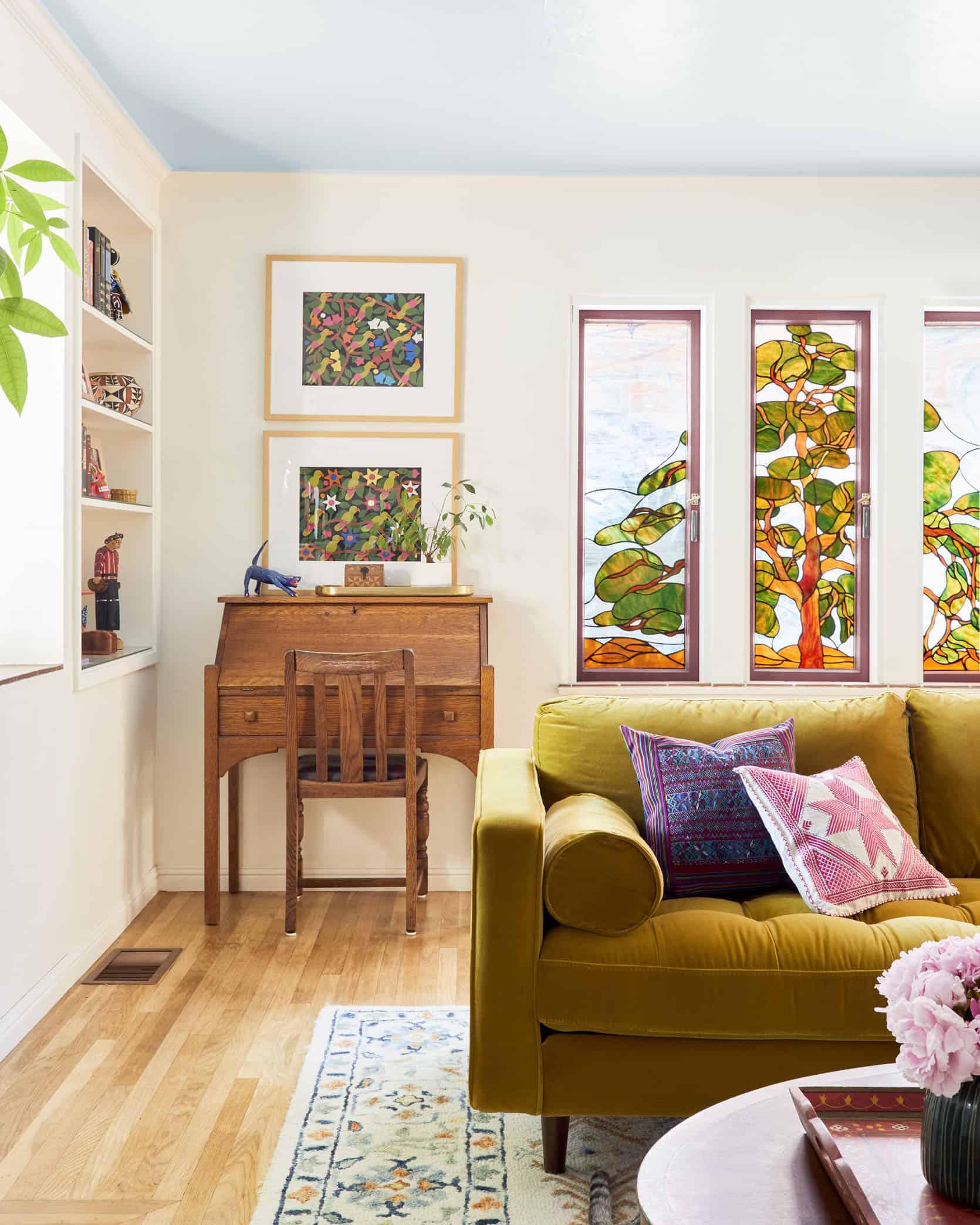
Transitioning to a different ambiance, the living room in Sara’s parents’ residence exudes warmth and joy. Consistent walnut tones between the sofa legs and coffee table are complemented by mid-range wood tones in the floors, secretary desk, and painted armoire.
design by emily henderson and max humphrey | styling by emily henderson | photo by kaitlin green | from: revealing my brother’s ultra cozy family room (and the most comfortable green sectional)
Shifting towards a moodier setting, the River House family room showcases a diverse range of wood tones. The rich red base of the sofa harmonizes with neutral light floors, while black-stained coffee tables act as a unifying element.
design and styling by emily henderson | photo by kaitlin green | from: robyn’s welcoming patterned dining room reveal
Red-toned woods, often stigmatized due to past design trends, find redemption in Emily’s friend Robyn’s dining room. The opulent red-toned floors and table seamlessly blend with black-stained wood chairs and painted built-ins.
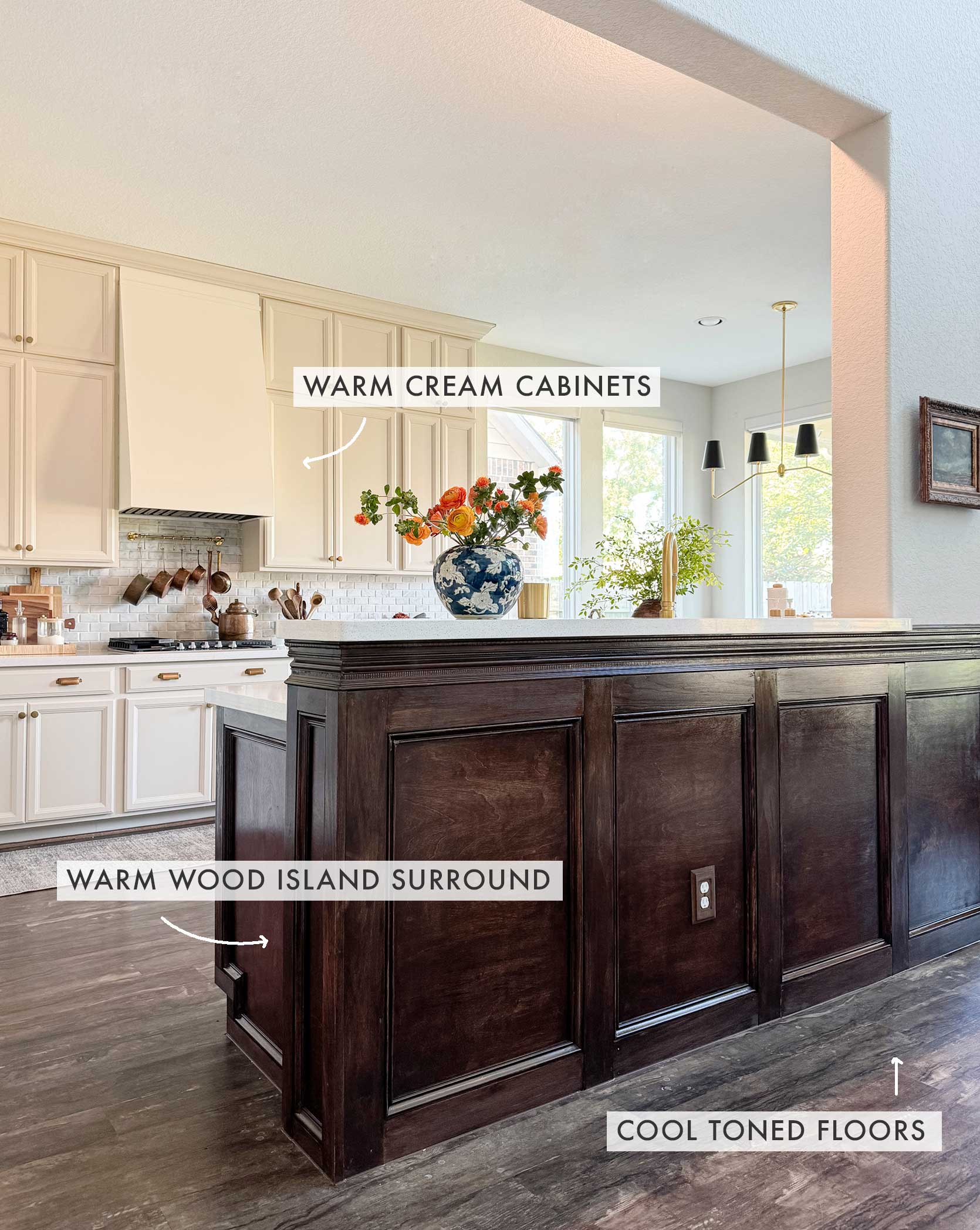
Exploring cool-toned wood, designer Fariha Nasir’s home features floors that posed a color challenge. Despite this, the creamy white cabinets effectively mediate between the built-in island and the floor, creating a cohesive look.
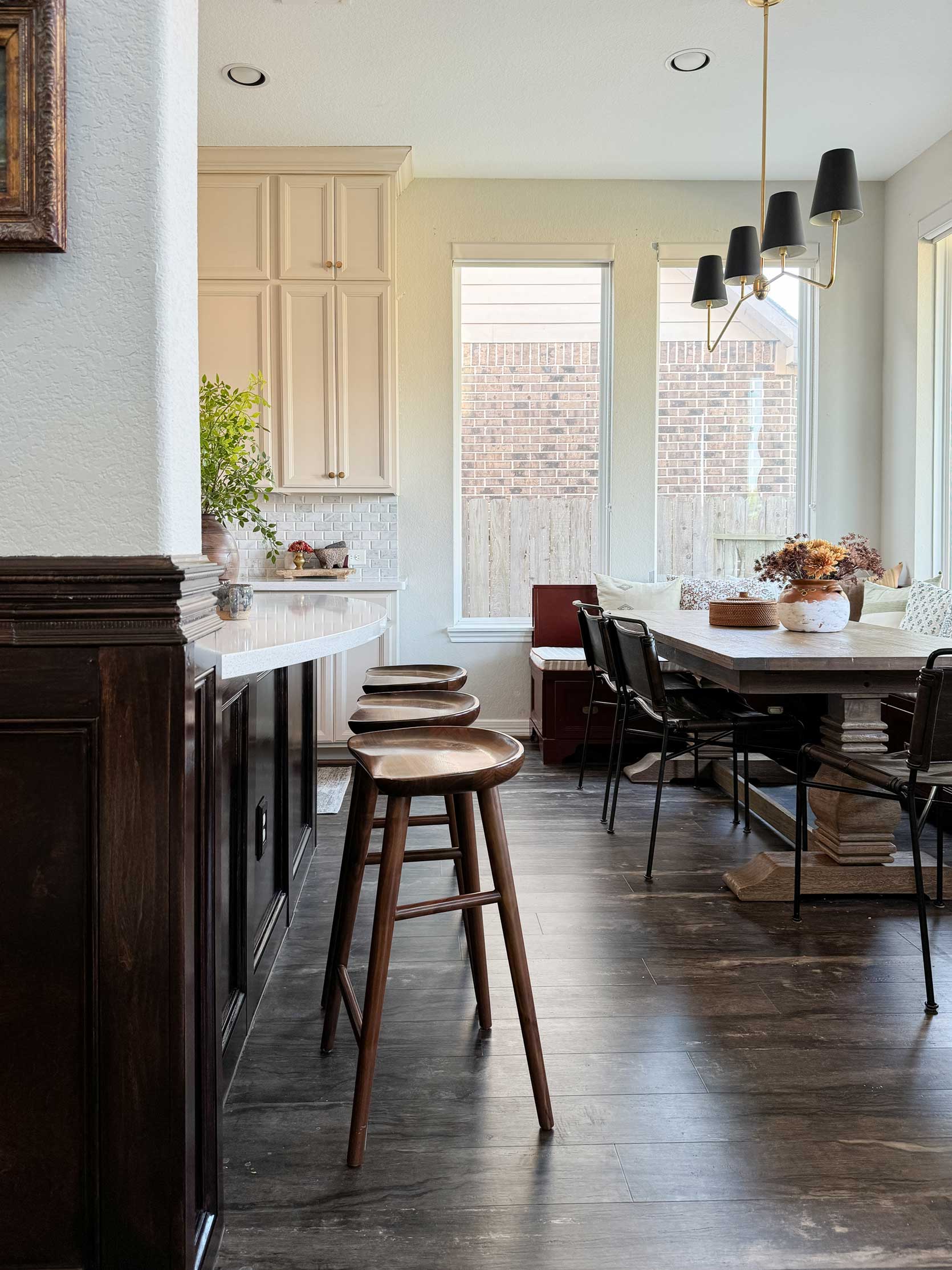
Whether with or without a rug, it is possible to create a visually appealing room even with less-than-ideal materials or surfaces. Remember, you can still achieve a beautiful space that defies conventional rules.
Let me know if you have any further queries regarding wood mixing, and I am more than happy to engage in discussions with you in the comments section. Until next time, as a new North Carolina resident (exciting!), I wish you all the best in your design endeavors.
Opening Image Credits: Design by Emily Henderson and Max Humphrey | Styling by Emily Henderson | Photo by Kaitlin Green | From: Revealing My Brother’s Ultra Cozy Family Room (and the Most Comfortable Green Sectional)