
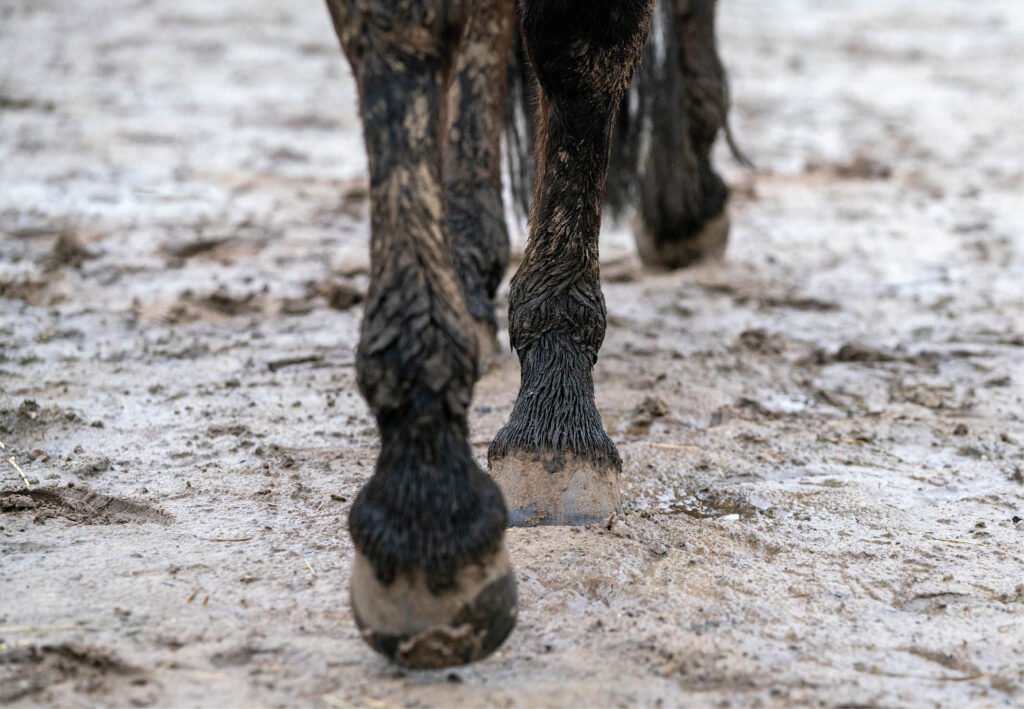
Thrush is a common bacterial infection of the hoof that can affect any horse kept in unclean conditions or muddy paddocks. It can also develop in hooves with built-up dirt and manure, particularly in the clefts alongside the frog on the underside of the hoof. While hooves with deep clefts and narrow heels are more susceptible, thrush can also occur in flatter, wider hooves. Horses shod with therapeutic pads are also at risk, as the bacterium can thrive between the hoof and pad.

How To Recognize It
Thrush is easily detectable once it takes hold. It emits a foul odor and appears as a black pus-like fluid in the clefts alongside the frog. The black color of thrush stands out against the natural color of the hoof, and the affected frog may become black and spongy as well. While thrush typically doesn’t cause lameness, it can lead to soreness if it penetrates deep into the sensitive tissues of the hoof, causing the horse to flinch and potentially exhibit lameness.

How To Treat It
To combat thrush, maintain a clean and dry stall with fresh shavings. If the horse is in a wet or muddy environment, consider relocating him to a drier area or providing a dry place to stand. Remove debris from the hoof twice a day, paying attention to the clefts and grooves. Clean the entire bottom of the hoof with warm water, a hoof brush, and antiseptic, then apply an antimicrobial thrush treatment product. Consistent treatment for a week or more should clear up the thrush. If the condition persists, consult your veterinarian for further assistance.