
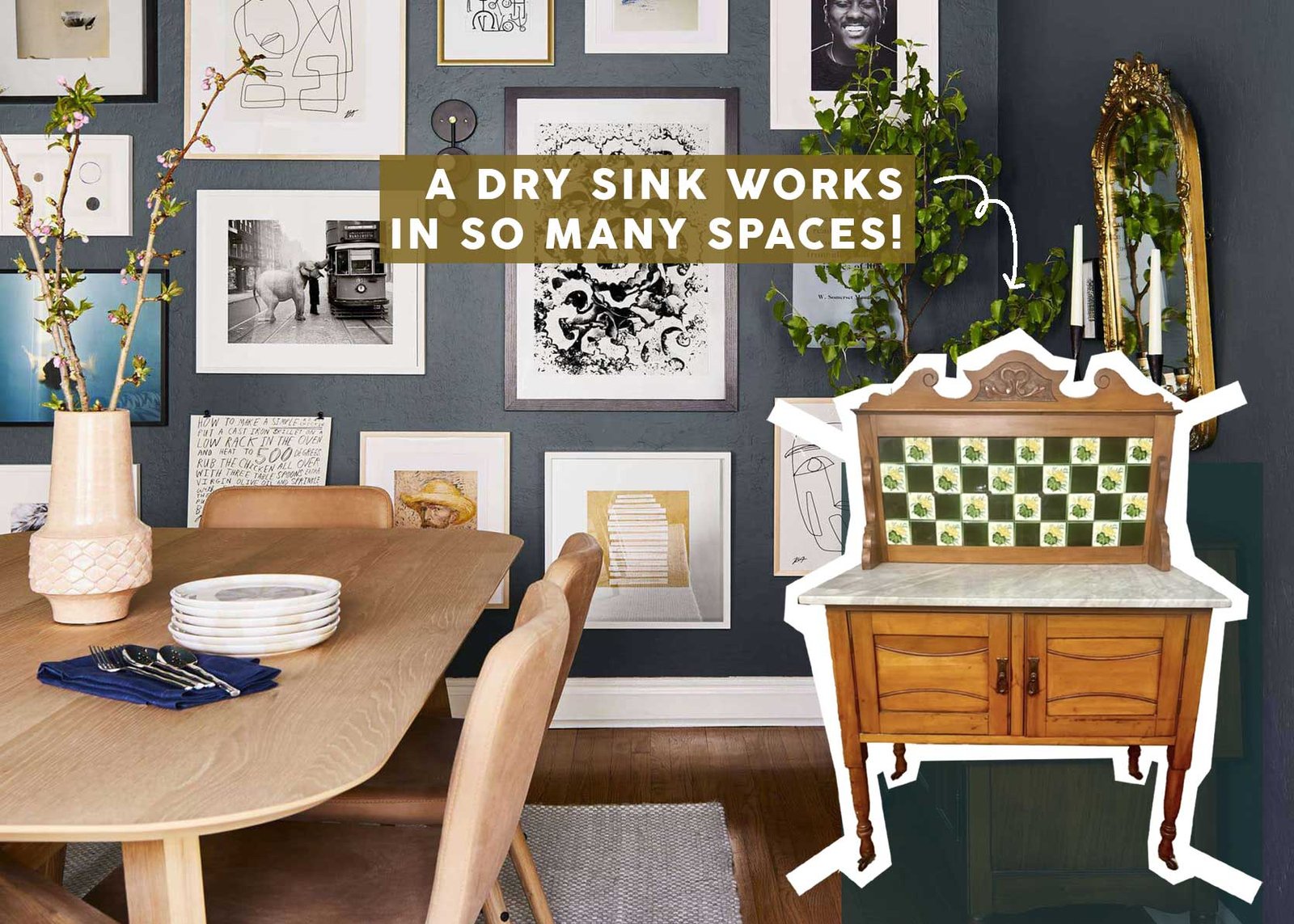
Welcome back to another installment of what I’m loosely calling “Marketplace Marvels.” Or perhaps “Secondhand Scores”…[edits headline because I like that better]. The title is a work in progress, but the heart is the same: What can you do with all those interesting, affordable, and durable vintage and antique finds you scroll or walk past on Facebook Marketplace, Craigslist, or at your local flea market? Don’t get furniture FOMO; let’s learn about them, figure out what they should cost you, and see how other people are using and styling them, shall we?
What Exactly Is An Antique Dry Sink?
A dry sink is exactly what its name suggests: A “sink” without running water. Prior to homes having indoor plumbing, this piece of furniture was used to hold a large wash bowl and pitcher that people used to wash their hands, faces, food, bodies, and the like. They had a small backsplash made of either wood, stone, or tile to protect the wall behind it from getting wet. The cabinet-like piece came into popularity in the early to mid-1800s, the predecessor to the simpler washstand, which was a compact wooden stand without enough room to set the bowl and hold the water, possibly even a towel.
Once plumbing came into play (that was the early 20th century in the US), these fell out of favor, and now are used for decorative purposes…more on that if you keep reading.
How Do You Find One & How Much Do They Cost When You Do?
As I learned from the comment section of my first article about barrister bookcases, prices vary widely on secondhand items sold on local marketplaces, depending on where you are. Perhaps it’s supply and demand. Or maybe it’s simply different inventory in different parts of the country. But regardless, I wanted to walk through some of the dry sinks I found within 50 miles of me here in Los Angeles.
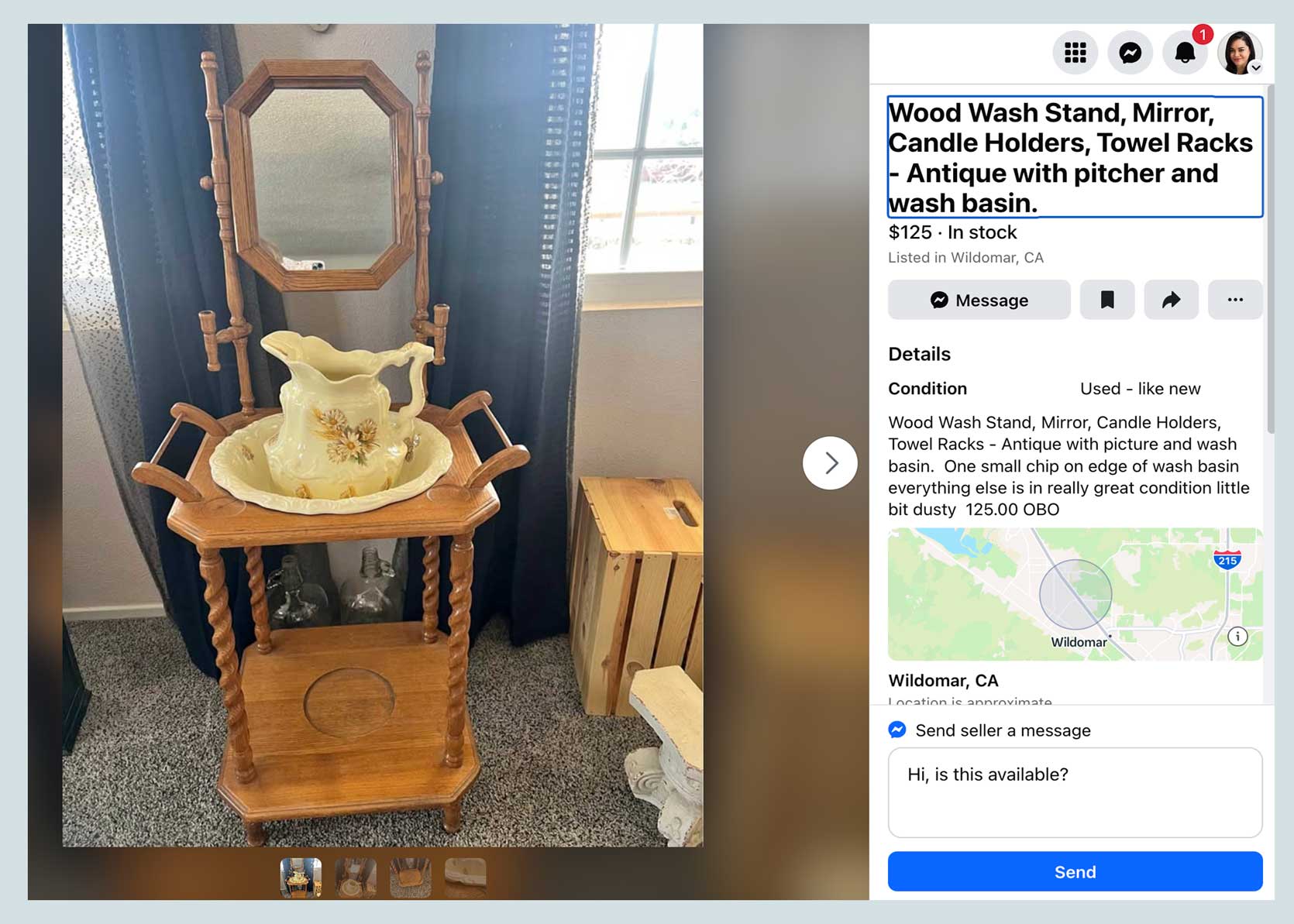
Before dry sinks emerged, washstands and wash basins were the norm. As you can see from above, it was just large enough for a bowl or basin, with room to place the pitcher below when in use. This one even has a mirror and side rails for towels. I can’t envision much of a use for this these days, but nostalgic, nonetheless.
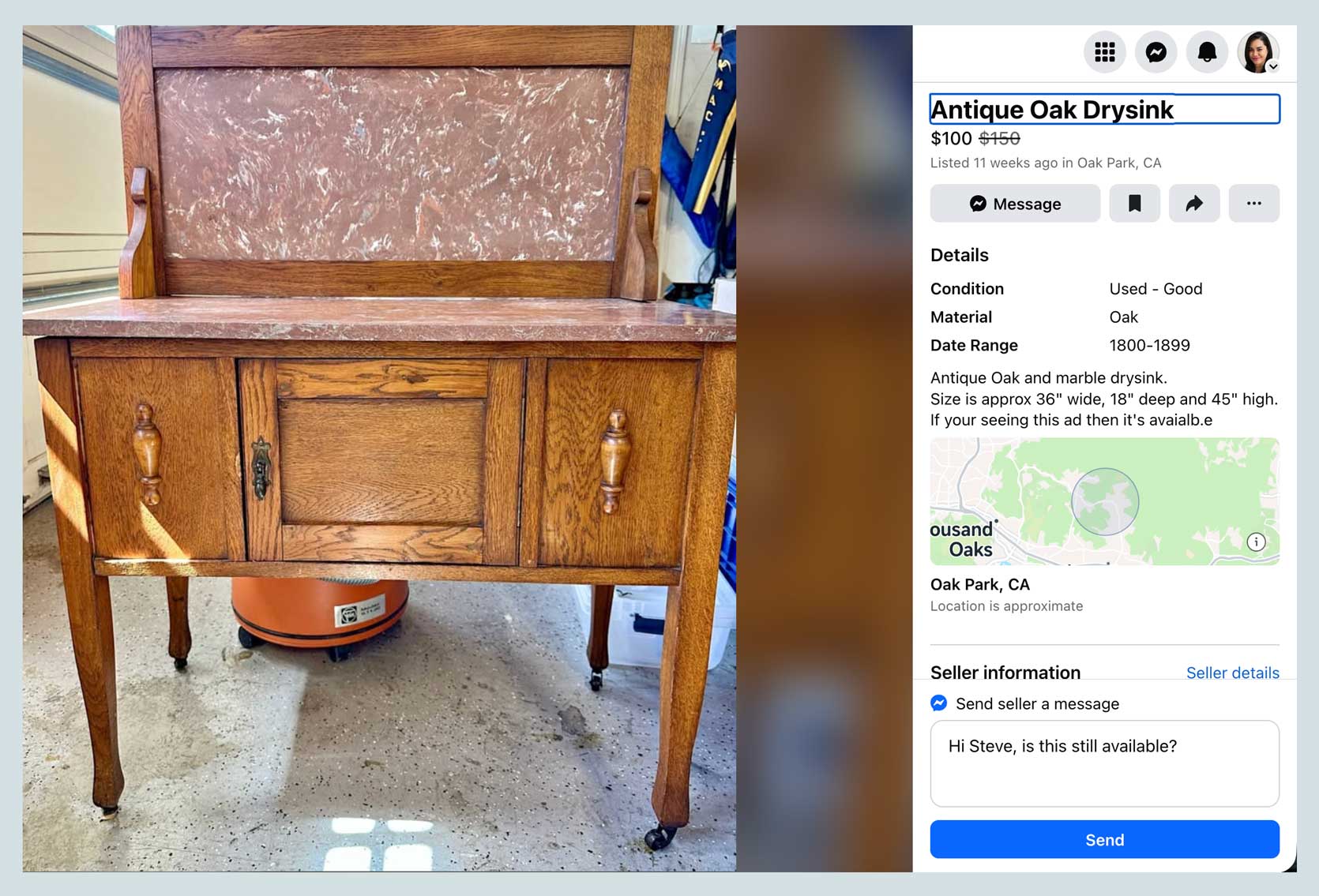
And here is a proper dry sink, as I mentioned, it’s the evolution of the wash stand we saw prior. This one is so special with its pink marble and delicate detailing. And at $100 (!!!), it’s a complete and utter steal. If you’re near Oak Park, California, please grab this one.
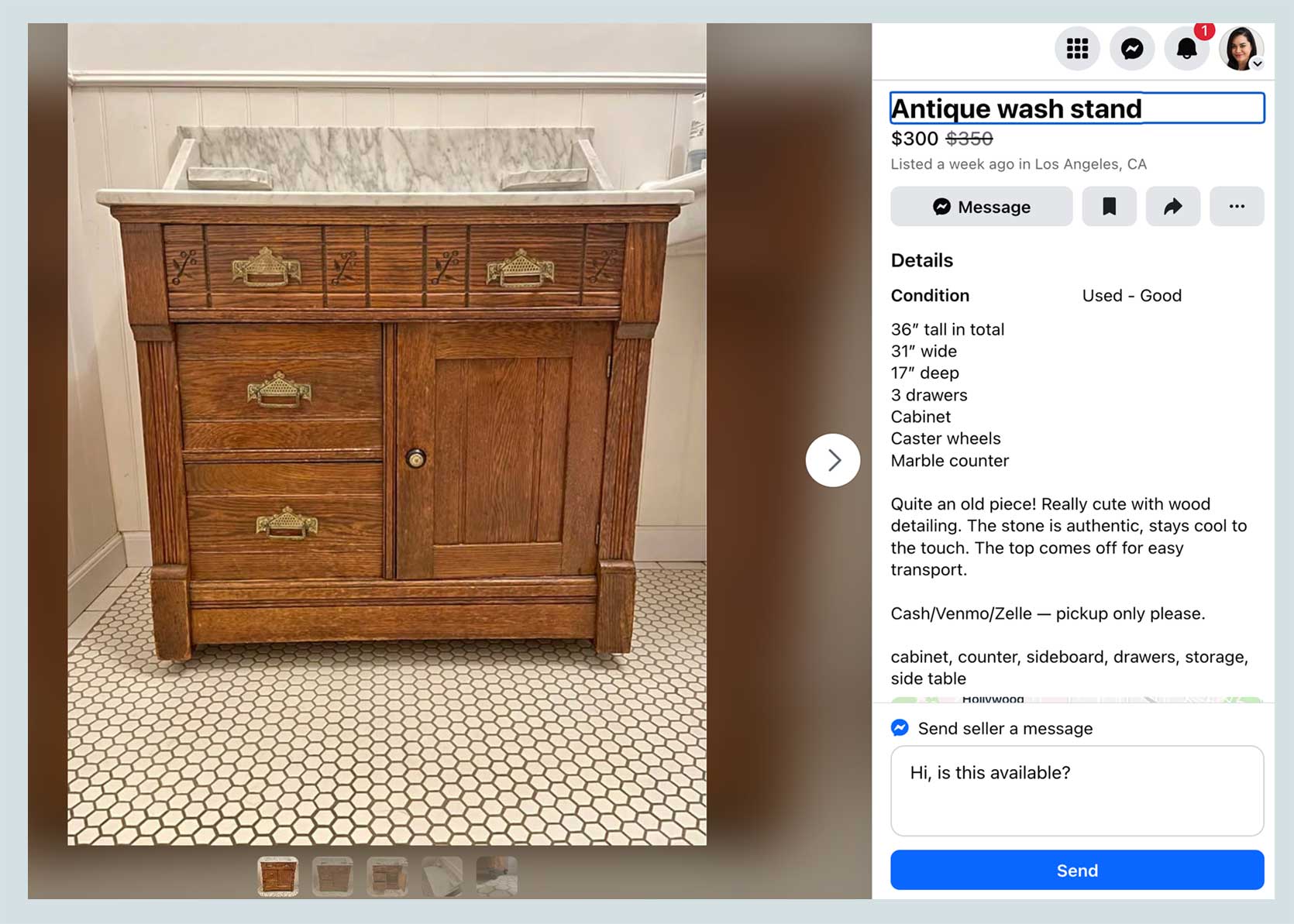
Here is one that’s a bit pricier, but still far less expensive than anything you could buy on the market new today. Solid wood, marble top, brass hardware, cute little carvings, are you kidding me? Note that this one is called a wash stand, so be sure to check both names when you’re hunting for one.
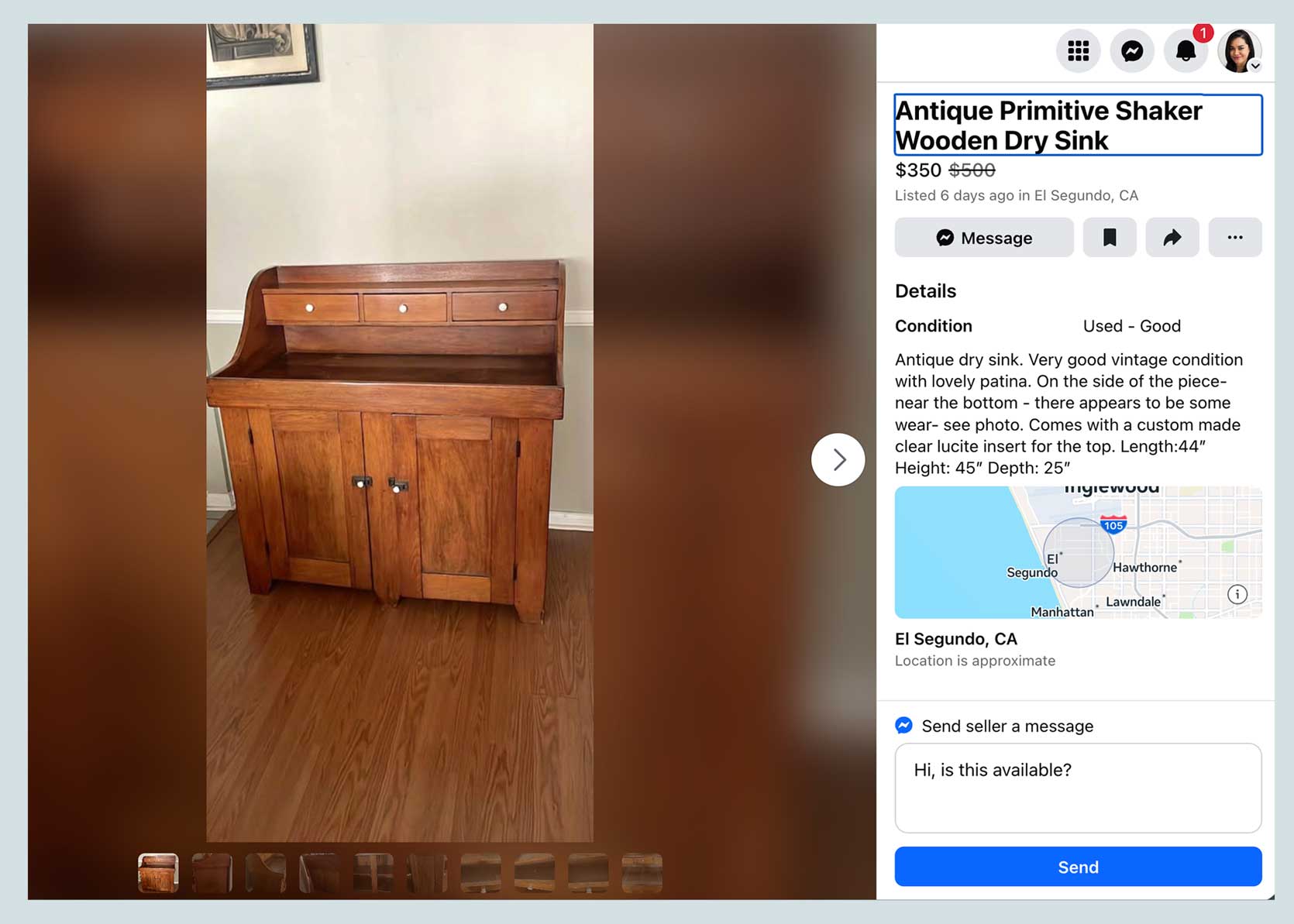
A tick more expensive than the last, but a good size at 44 inches wide. This one is in a Shaker style, which you can see through limited ornamentation and the cabinet door design we all know (and still use) today. It has a lip around the front to prevent any spills from landing on the floor.
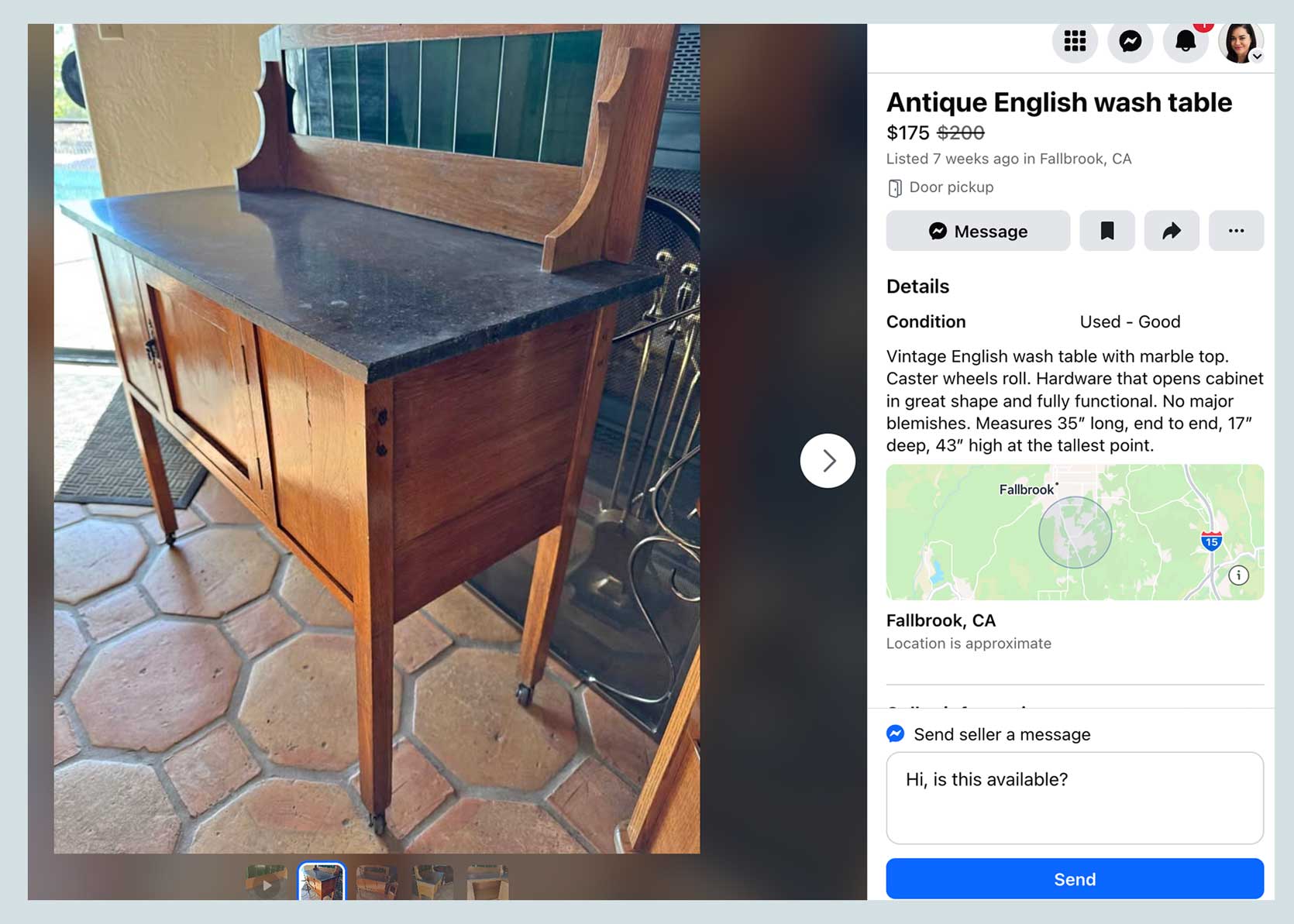
This one is called a “wash table,” so get creative with those naming conventions while you search, people! You’ll find a lot of these leggier versions on casters, which at the time, made them easy to move around as needed.
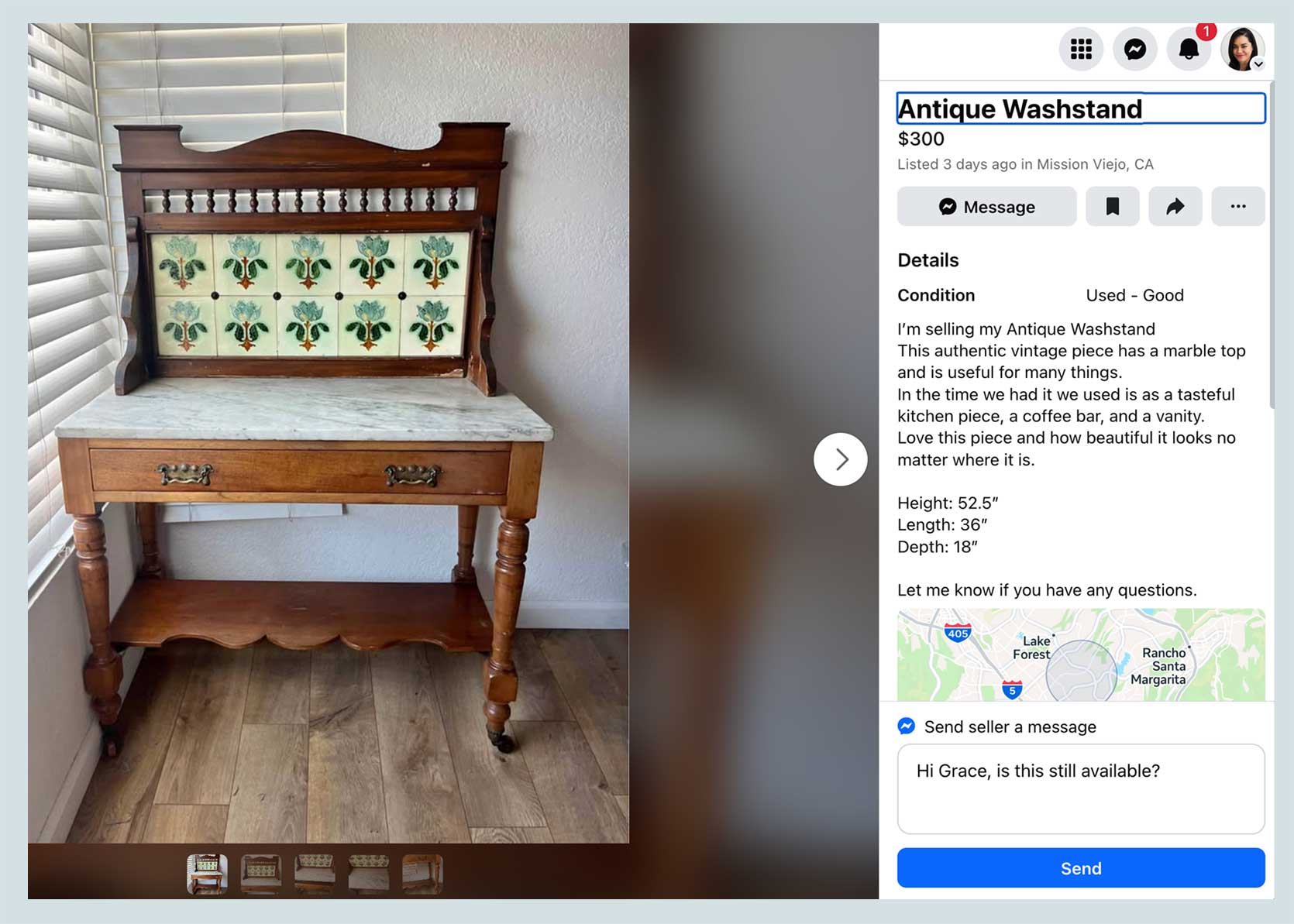
Tile work can be simple and solid colored, like the previous dry sink, or more decorative, like the one above.
The Different Kinds Of Dry Sinks
As is standard with antiques, different eras and regions dictate what materials were used and what their styling was. I’m sure there are plenty more I’m not covering here, but I do not have a degree in dry sinks (yet). Here are some of the most common ones I see when secondhand shopping:
Marble-Topped: These came into popularity in the Victorian era (mid-1800s to early 1900s). Marble was a common material at the time and was used for its durability. Around this time, a recessed basin was scrapped in place of a flat surface. Dry sinks from this time period are also a bit more ornate in their woodworking, as things were in the Victorian age.
Tile Backsplash: Tiles as a backsplash came into play in the early 1900s, when plumbing began appearing in homes. Some are in the Arts & Crafts or Mission style, others are Edwardian, such as the one above (though the seller said it might also be Victorian; it doesn’t look ornate enough for that IMHO).
Here is another dry sink with a tiled backsplash.
The lister points out that this piece is Edwardian in style; a brief investigation into the characteristics of Edwardian furniture reveals that it fits the bill with its lighter wood tones, simpler woodworking, and floral designs.
**All-Wood Dry Sink with Bottom Cabinet**: Some dry sinks offer more storage, like the one pictured above. This particular piece features a primitive design from the early 19th century, identifiable by the recessed basin.
**Repurposing and Styling Ideas**:
After exploring various types of dry sinks, it’s clear that they can be repurposed in creative ways to enhance home decor. From kitchen storage to entryway elegance, dry sinks offer versatility and charm.
**Different Uses**:
Dry sinks can serve as kitchen stations, console tables, service pieces in dining rooms, bars, vanity tables in bathrooms, or even be retrofitted with plumbing for use as a wet sink. Their adaptability makes them a unique addition to any space.
**Decor Tips**:
Pairing a rustic dry sink with elegant crystal and brass accents can create a striking juxtaposition. Adding interesting tile work to a dry sink can transform it into a colorful and patterned entry table.
**Functional Options**:
For parents, a dry sink can also double as a changing table with its built-in lip for added safety. Adding a cushion with a buckle can further enhance its functionality.
In conclusion, antique dry sinks offer both aesthetic appeal and practicality, making them a sought-after piece for vintage enthusiasts. For those considering adding one to their home, the possibilities for incorporating a dry sink are endless. Whether hunting for one on Marketplace or exploring vintage shops, the charm of a dry sink can elevate any space.
**Author’s Note**:
The article includes design insights from Arlyn Hernandez and Sara Ligorria-Tramp, showcasing the versatility of dry sinks in interior decor. The vintage dry sink featured in the article was found on Facebook Marketplace, highlighting the potential for unique finds in online marketplaces.
*(Original content and images credited in the footer)* following sentence using different words:
“The cat chased the mouse around the house.”
“The feline pursued the rodent throughout the dwelling.”