
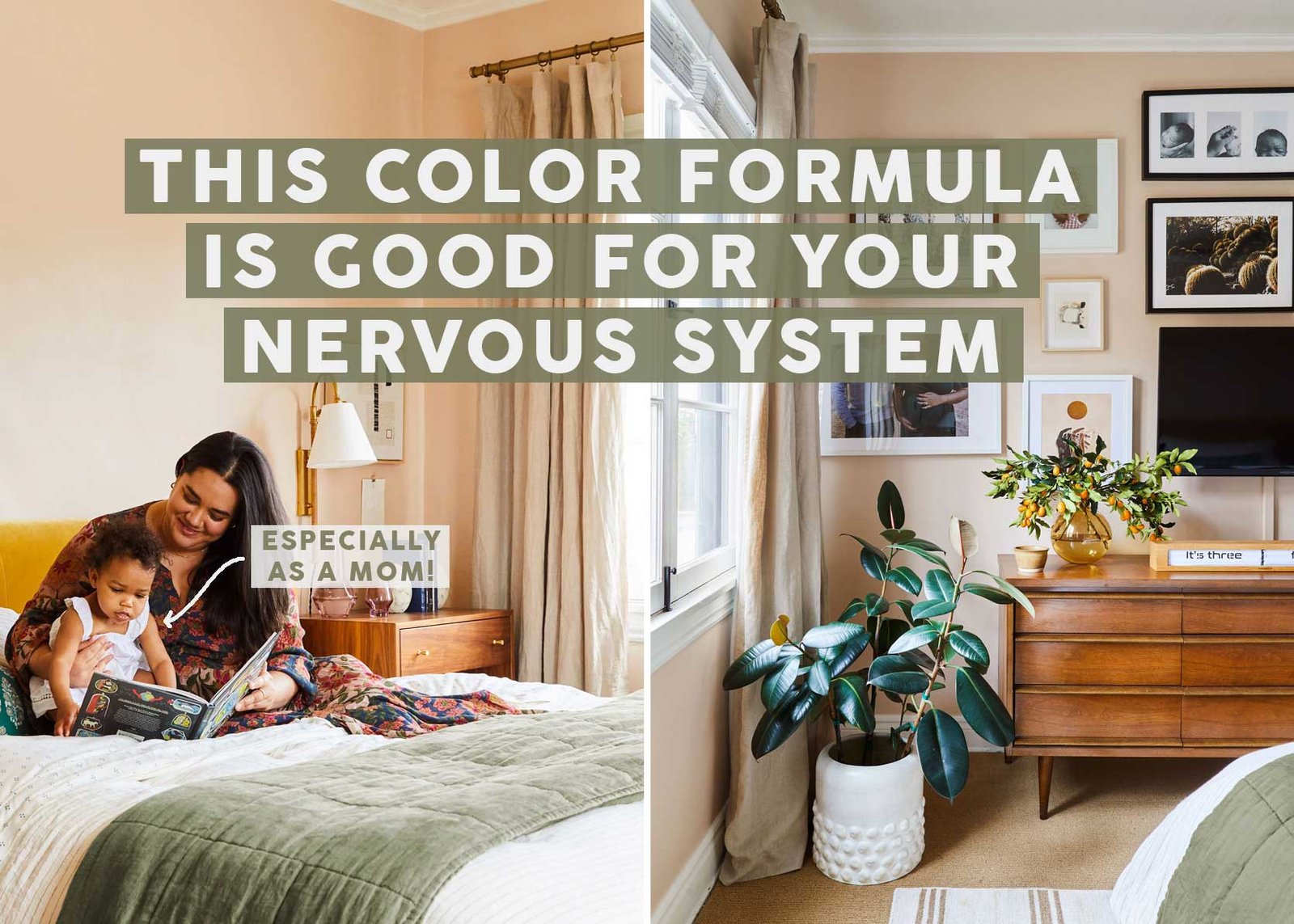
As someone who writes about design and decorating, I have seen my fair share of rooms. With a deep appreciation for interiors, I find myself falling in love with various looks and styles. While pinpointing my exact design aesthetic is challenging, one thing I know for sure is that I have a strong affinity for color. Just take a peek at my Instagram and Pinterest saved folders, filled with shades of blue, yellow, burgundy, peach, mustard, olive, and a touch of creamy beige.
However, amidst my love for color, I have discovered something about myself: my nervous system cannot handle excessive contrast. This realization is relatively new to me, especially since becoming a mother. Picture this: I am currently seated on my couch, glancing around my living room, and my line of sight is filled with a play ice cream counter, a marble run, a toddler shopping cart, a baby stroller, a Little People’s farm, a wooden train…the list goes on. While having a dedicated playroom would be ideal, our home is where we live fully, with toys scattered in every room. This constant clutter and occasional disorder lead to one thing for me—frayed nerves. Pair this chaos with a bright blue sofa against a white wall and a dark reddish floor, and it becomes a sensory overload. The high contrast between the seating and walls, as well as the warm laminate planks against the cool velvet sectional, overwhelms my eyes.
Introducing: low-contrast design, the style that brings me peace, tranquility, and the ability to coexist with a house full of high-contrast toys.
Understanding Low-Contrast Design
Low-contrast design is exactly what it sounds like—a space where materials and colors exhibit minimal contrast. There are no stark black-and-white combinations or bold complementary hues from opposite sides of the color wheel. Instead, tones are harmonious, wood tones blend seamlessly with selected colors, and everything exudes a sense of quiet, even with a generous use of color.
Some characteristics of a low-contrast room include:
- Tonal or analogous colors (sitting next to each other on the color wheel)
- Avoidance of sharp, bright whites or deep blacks, opting for mid-tones
- A tight color palette with limited added shades
- Surfaces like floors, ceilings, and walls blending within the subtle color palette
Exploring High-Contrast Rooms
Before delving into examples of low-contrast rooms, let’s appreciate some high-contrast spaces. Each room below is stunning in its own right, showcasing beauty, interest, and necessary tension. However, high-contrast designs may not resonate with everyone, especially individuals navigating life with young children and a plethora of belongings in their living spaces.
An example of high contrast is a room with light minty walls, a saturated rust sofa, a greige rug, a walnut wood desk, and a mahogany chair. While visually appealing, such a setup may not induce a sense of peace.
Similarly, a dark navy tile bathroom with white porcelain fixtures and light neutral penny hex floors exemplifies a high-contrast setting.
On the other end of the spectrum, a black and white room embodies the quintessential contrast of light and dark.
A room featuring complementary colors like red and green, albeit in a more subdued plum hue, showcases a high-contrast aesthetic.
Conversely, an all-black monochrome room represents an absence of contrast, adding diversity to the design spectrum.
Embracing Low Contrast Through Color
Low-contrast rooms can be achieved using color or neutrals, both resulting in visually pleasing aesthetics. Let’s begin with color, my personal preference.
In a room styled by Velinda Hellen, Julie Rose, and Grace de Asis and featured in House Beautiful, varying shades of creams, browns, and soft greens create a soothing and visually engaging space.
For a more saturated look, a room by Spec + Sage featuring deep blue tones with a white tulip table demonstrates a balanced use of color.
Another perspective of the same room highlights the cohesive blend of amber, olive green, and blue, maintaining a harmonious color scheme.
In Kate Upton’s house featured in Architectural Digest, warm undertones dominate the color scheme, creating a cohesive and inviting atmosphere.
Low Contrast Through Neutrals
For those who prefer neutral tones, low-contrast design can be achieved through warm creams, taupes, and ochres, offering a calming and cohesive aesthetic.
Despite the presence of a burgundy velvet bedding, a room with peachy walls, mushroomy doors, pine floors, and a brown wicker chair achieves a harmonious balance.
In a room featuring shades of wheat, brown, and red, the consistent warm palette creates a neutral and soothing ambiance.
Even in a room filled with various elements, maintaining a consistent warm palette allows for a cohesive and visually pleasing space.
Lastly, a brown and greige living space exemplifies the beauty of neutrals done right, offering a calming and inviting environment.
As I conclude, I have spent weeks exploring the concept of low-contrast design, leading me to appreciate its impact. Stay tuned for a significant announcement in my next post, where I will further delve into this topic along with other design insights. Exciting things are on the horizon!
Opening Image Credits: Photos by Design by Arlyn Hernandez (me!) | Styling by Emily Bowser | Photos by Sara Ligorria-Tramp | From: 3 Years In The Making Then An Unexpected Move: Arlyn’s Bedroom Reveal Is A Lesson In The Beauty Of “Unfinished” Design