
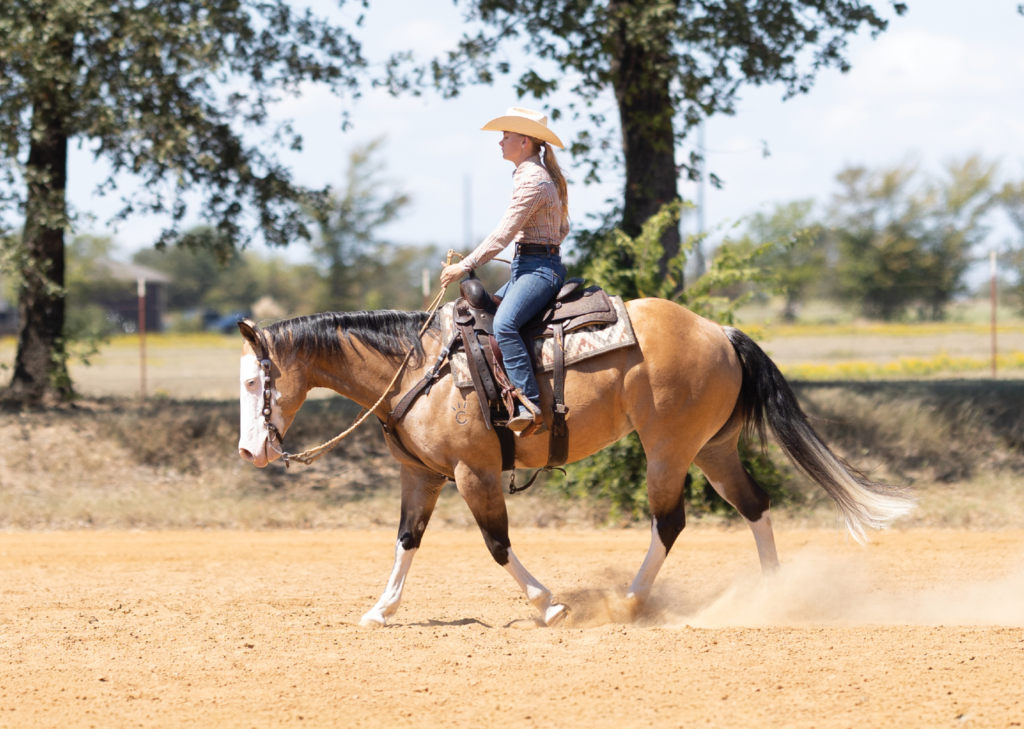
Developing a subtle and effective stop can lead to more confident cues and responses for riders of all levels.
To improve your horsemanship skills and communicate with more subtle cues, it is essential to master one fundamental skill: a correct, consistent stop. Before focusing on speed, patterns, or advanced maneuvers, ensure that your horse understands how to stop willingly and softly whenever you ask.
Regardless of whether you are familiar with the one-rein stop or the two-rein stop, the ultimate goal is clear communication and consistency.
Start by practicing the stop at a walk or a slow jog, ensuring that you can consistently achieve a correct stop using all your cues—your voice, hands, and feet. Saying “whoa” should result in an immediate response from your horse, regardless of the discipline.
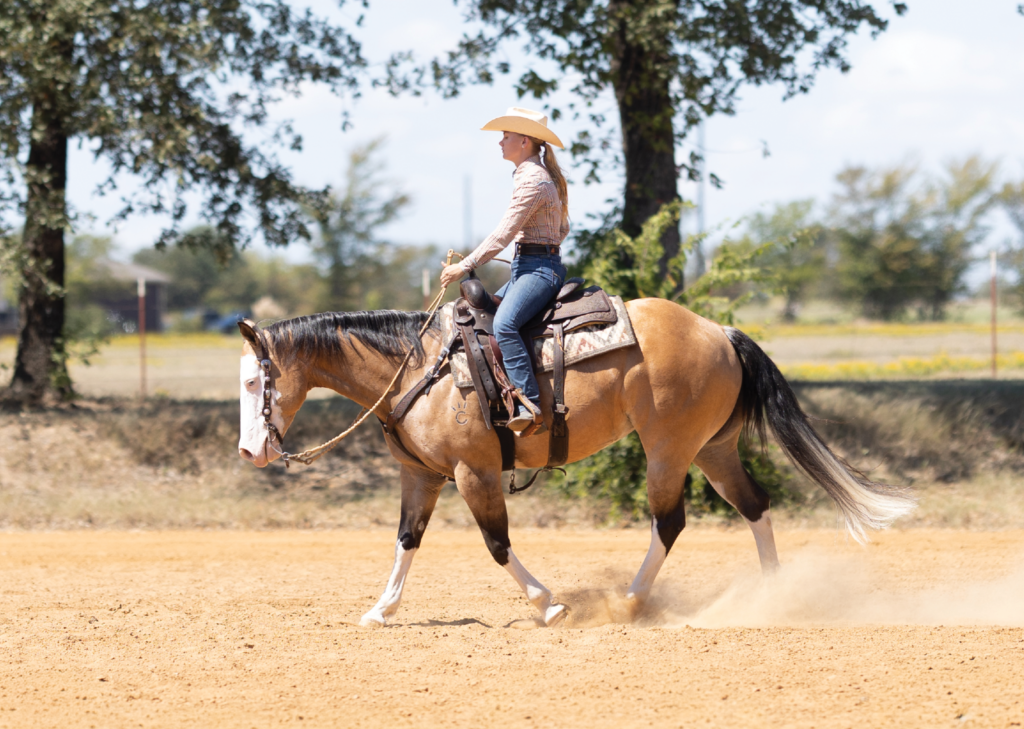
Understanding Your Cues
Your hand and foot cues may vary depending on your background. Whether you use a spur stop or a more traditional rein stop, what’s important is that your cues are clear, fair, and consistent for your horse to understand.
Along with using your voice and hands, pay attention to your body position when asking for a stop. Sitting deeper in the saddle and maintaining a slight backward tilt in your upper body signal the horse about an upcoming transition.
Leaning forward and squeezing with your legs typically signal the horse to go forward. Therefore, maintaining body awareness and softness in your cues is crucial for effective communication.
Be mindful of the pressure between your knee and seat as excessive tension can interfere with your horse’s movement and understanding of your cues.
To execute a balanced stop, start slowly with a green horse at the walk or trot, focusing on consistent cueing. Progress to the lope once you have mastered the stop at slower speeds.
Practice these exercises in a controlled environment like an arena for safety and better focus. As you advance to higher-level maneuvers, maintain clear communication using your hands, legs, and voice in harmony.
Top reiners focus on balancing their horses rather than pulling on them, emphasizing the importance of maintaining softness and balance in your cues.
The hand and foot cues transition into being supportive tools, rather than the primary message.
As your horse becomes truly trained through consistent and correct repetition, your cues become more subtle. They begin to rely on your hands for guidance, rather than direction – a result of mastering the basics through repeated practice.