
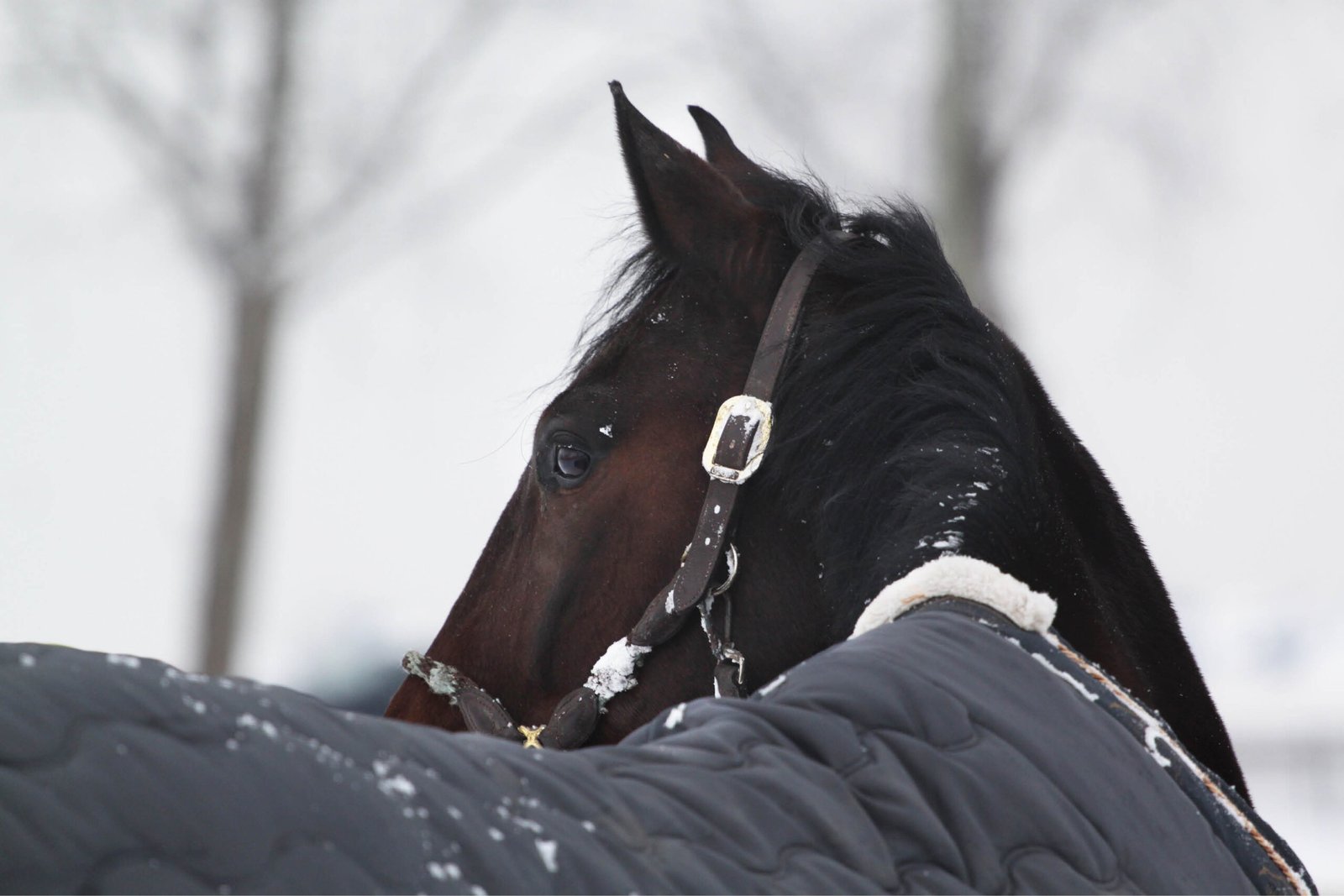
The young girl taking care of the geriatric mare while her owner was out of town had called my emergency pager in a panic. “Misty has a terrible wound on her withers,” she gasped through her tears, “I need help right away!”
When I arrived, I could smell it from across the barn. The gaping wound was big, gooey, and painful to the touch. It was also located right under where the horse’s blanket normally rested on her withers. The poor girl had taken the blanket off to groom the old lady in the owner’s absence. Unfortunately, that blanket hadn’t been taken off in a very long time.
Think this could never happen to you? Don’t be so sure. You might be surprised to learn that this wasn’t a place where these kinds of things are common. In fact, it was at a well-managed barn with a caring owner who made an innocent mistake. And blanket injuries like this are much more common than you might realize.
In this article, I’m going to tell you about some of the most common blanketing mistakes I’ve seen in practice, and how you can avoid them. But first, I’m going to help you decide whether your horse needs a blanket at all.
To Blanket or not to Blanket?
Pumpkin spiced lattes, football games, and color-changing leaves, that’s what most people think of when the crisp, cool days first arrive. If you’re a horse person however, chances are breaking out the blankets is one of the first things that comes to mind.
Does your horse have a wardrobe that would be the envy of the most fashion-conscious teenager? Or are you more of a “one-stop-shop” kind of owner with more limited options? And how do you decide when it’s time to start outfitting your horse for winter? Here’s a thought: Do you need to outfit your horse at all? That’s the first decision you should make. Because believe it or not, blankets aren’t without risk, and in many situations your horse may not need one. Here’s how to decide.
Heat Retention
In part because of their large size, horses are able to retain heat and stay warm at much lower temperatures than humans can. The “thermoneutral zone,” or temperature where a horse can maintain body temperature without expending any excess energy, is between 40- and 80-degrees Fahrenheit. And if it isn’t windy or wet, a horse can tolerate temperatures of zero, or even lower as long as they have adequate shelter. Of course, this assumes the horse is healthy, acclimated to the conditions, and has a good winter coat.
All this means that if you have a healthy, young, or mature horse with a good winter coat, it might be best to skip a blanket altogether. But if your horse is body clipped or elderly with compromised health, a blanket is probably needed. Lastly, if you like to ride during winter months and your horse thinks wallowing in mud during turn-out time is a fun activity, blanketing might seem essential—as much to keep you sane as it is to keep him warm!
Top 10 Blanket Blunders
(and how to avoid them)
If you’ve come to the conclusion that your horse really does need a blanket, you’ll want to avoid the following common blanketing mistakes to make sure he’s protected, safe, and clean!
Blunder #1: Skipping Blanket Checks
Regularly checking underneath your horse’s blanket is one of the most important things you need to do to keep him safe. If you ride every day, this isn’t a concern. But if your horse is a retiree or companion horse that doesn’t have a regular job, it’s easy to outfit him in a blanket in the pasture and then lose track of time! Problem is, if you don’t look, you’ll never know if your horse has a bad blanket injury like the one my client found on her old mare. You’ll also never know if the blanket is damaged or leaking in the rain, or if your horse has lost a significant amount of weight. You don’t want to be surprised by what you find when you remove your horse’s blanket in the spring.
Avoid this by: Making a point of doing a visual inspection of your horse’s blanket every day at feeding time. And removing it a minimum of two to three times every week to check in on your horse’s condition.
Blunder #2: Strap Control
Blanket straps are one of the most common sources of blanket injury. I’ve seen significant soft tissue injuries because of legs getting caught in too-loose straps, and serious wounds caused by poorly adjusted straps that rub. I’ve even heard stories of horses getting trapped when snaps get caught on fences, stall guards, or hay nets.
Avoid this by: Choosing the right straps and making sure they’re adjusted properly. Surcingle straps around your horse’s belly should be adjusted so that they don’t dangle. But you can also run your hand easily underneath them. Leg straps are safest if they’re made from elastic material with easily broken snaps. As well as if they don’t hang below your horse’s hocks, and you attach them by crossing them over or looping them through each other. Better yet? Avoid leg straps altogether by using a butt strap that runs under your horse’s tail to help hold your blanket in place. Finally, if your front blanket closure has snaps, turn the open ends of the snaps inward toward your horse so they won’t hook on fences or stall grates if your horse rubs his chest.
Blunder #3: Size and Fit
We’ve all seen those annoying blanket rubs that cause hair loss on our horses’ shoulders—but did you realize these rubs can progress to the point where your horse gets sore, or even lame under saddle? The same is true when blankets dig into the base of your horse’s neck in front of his withers.
Avoid this by: Measuring your horse before you buy and finding a blanket style that’s right for his physique.
To determine the right size of blanket for your horse, measure the distance from the middle of his chest to his tail. Choose a blanket that covers his body without hanging too low, ideally hanging just below his elbows in front and stifles in back. Keep in mind that different body types may require different styles of blankets, such as those with darts in the shoulders or a cutback at the withers to accommodate various physiques.
If your horse is turned out in a blanket, ensure that it is suitable for the weather conditions to prevent discomfort and potential skin issues. Avoid over or underblanketing by paying attention to your horse’s behavior and adjusting layers accordingly. It’s also essential to maintain the waterproofing of blankets to protect your horse from getting cold and developing skin conditions.
Horses can be tough on their clothing, so it’s crucial to keep blankets clean and in good repair to prevent injuries and infections. Avoid putting a wet blanket on your horse, as it can create a moist environment ideal for bacteria and fungi to thrive. In dry climates, prevent static cling by applying an anti-static spray to the inside of the blanket.
Mistake #10: Rushing the First Time
Final tip: If your horse is still experiencing static issues, try using an anti-static dryer sheet on his back and sides before blanketing him.
Final words of advice: Before blanketing a horse for the first time, it’s important to introduce the blanket gradually, especially if the horse has never worn one before. Some horses may react well to a blanket, but others could become frightened and potentially harm themselves while trying to escape.
To prevent this: Take the time to acclimate a young or inexperienced horse to wearing a blanket slowly.
More From Dr. Barb Crabbe
H&R’s contributing veterinarian on keeping your horse healthy year-round.