
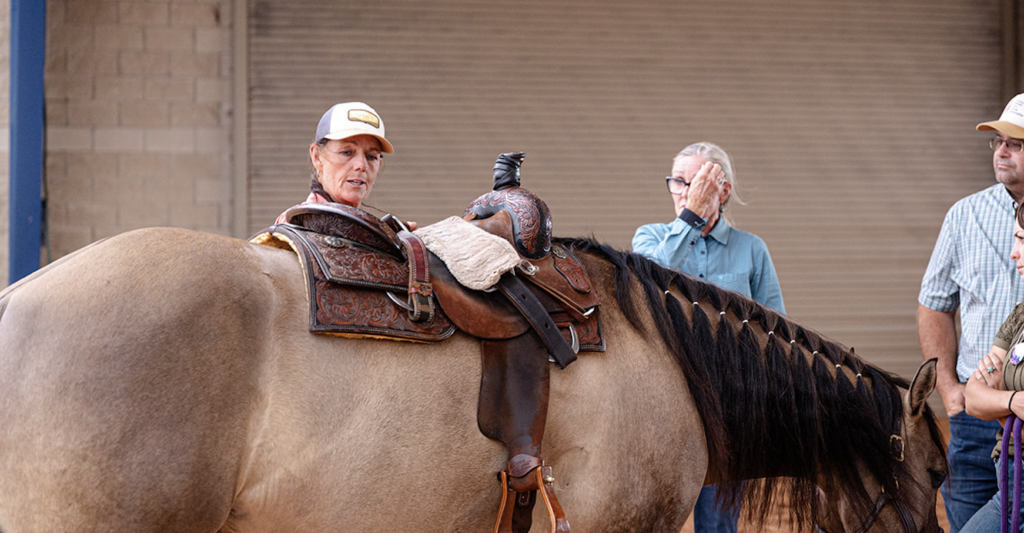
When it comes to saddle fitting, there are several key factors to consider to ensure your horse moves freely and comfortably. Checking your horse’s hooves, body, saddle placement, girth groove, and pads are all important details that can make a big difference in your horse’s performance.
If you missed part one of Wendy Winn’s saddle fitting series on balance, be sure to check it out here.
Saddle Placement
Proper saddle placement is crucial for your horse’s comfort and movement. Position the saddle so that the bars sit just behind the rear edge of your horse’s shoulder blade. This allows the shoulder to move freely without any restriction.
It’s important to consider the anatomy of the saddle and where the weight-bearing structure actually sits beneath the skirts. Placing the saddle too far forward can put pressure on the shoulder and cause discomfort for your horse.
Learn about 3 common saddle fit terms and what they mean here.
Girth groove & cinch type
Understanding your horse’s girth groove and selecting the right cinch type is essential for a comfortable ride. The girth groove is a natural channel behind the elbows where the saddle girth settles. Make sure to choose a cinch that fits your horse’s groove properly to avoid irritation.
Keep your pads and cinches clean and dry to prevent rubbing and discomfort. It’s important to have multiple pads and cinches on hand to rotate and allow for proper drying time between rides.
Saddle pad type and thickness
Wool saddle pads are recommended for their moisture-wicking properties. It’s beneficial to have different pad thickness options available to accommodate seasonal changes in your horse’s weight.
Just like adjusting your wardrobe for different seasons, you should adjust your saddle pads to ensure your horse’s comfort all year round.
Tip: Be familiar with your gear
Check the pressure and fit of your pad and cinch regularly to ensure your horse’s comfort and performance.